






 Image: getty
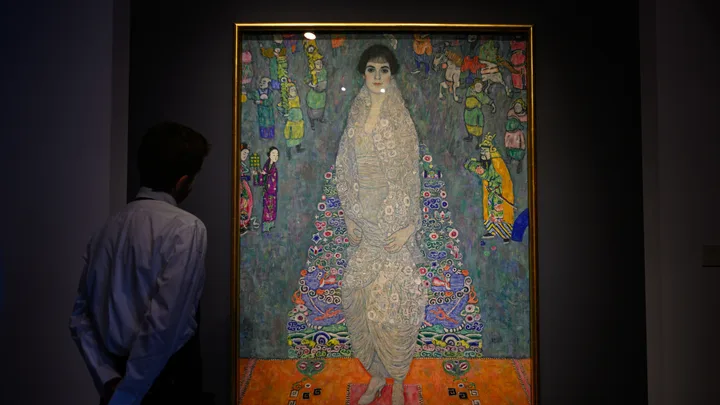
Gustav Klimt’s Portrait of Elisabeth Lederer has sold for an extraordinary $236.4m (approximately AUD $364 million) at Sotheby’s in New York, positioning it as the second most expensive artwork ever auctioned. The result surpasses all previous Klimt sales and establishes a new standard for modern works entering the uppermost tier of the art market.
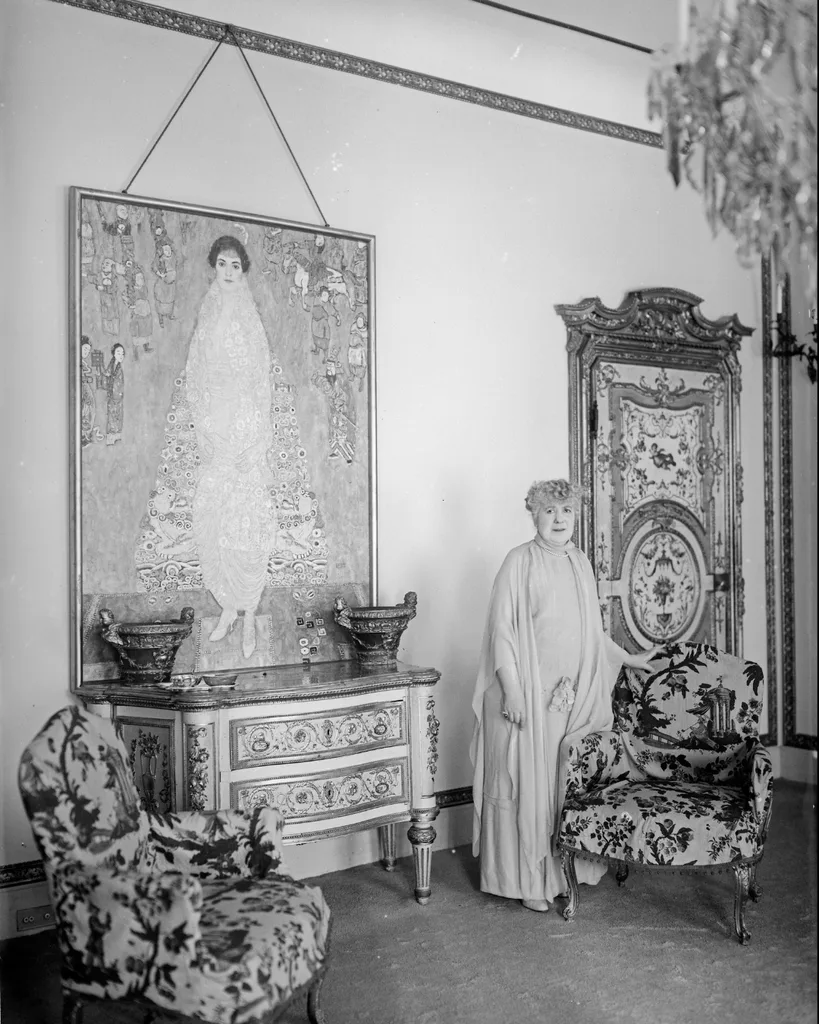
Painted between 1914 and 1916, the portrait depicts Elisabeth Lederer in a Chinese imperial robe against a densely patterned backdrop, characteristic of Klimt’s late ornamental style. The work survived Nazi seizure, a fire that destroyed much of the Lederer family collection during the Second World War, and decades in private hands before its restitution in 1948. Its rarity and historical trajectory have long made it one of the most scrutinised Klimt portraits to remain outside a museum.
Klimt’s painting now joins an esteemed list of artists whose works have fetched their own record-breaking sums – below, a guide to the ten most expensive paintings ever sold at auction and the astronomical figures they command.
The 10 most expensive paintings ever sold at auction
Leonardo da Vinci, Salvator Mundi (c. 1500)
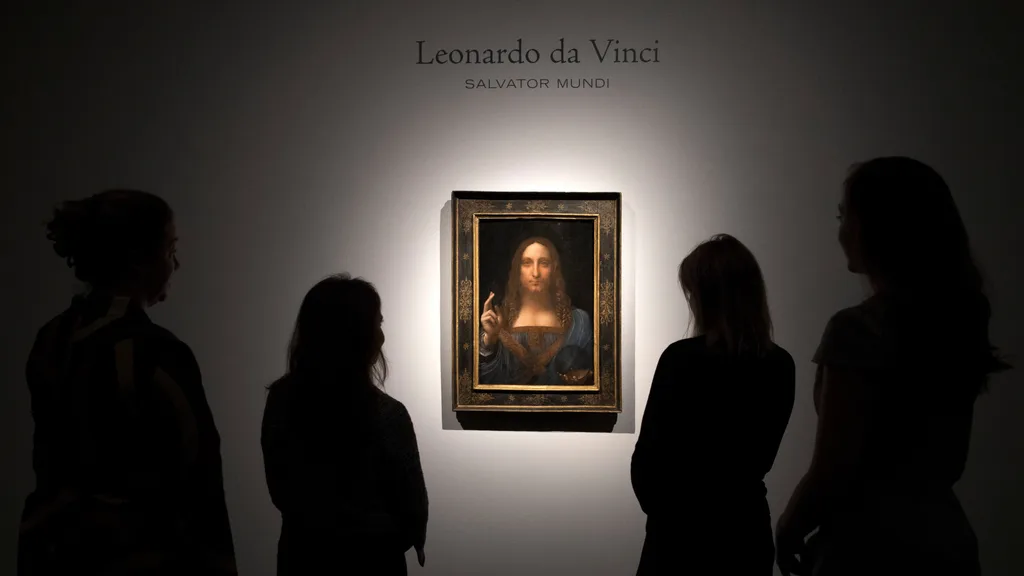


Few paintings have provoked as much debate as Salvator Mundi, a work whose authorship, restoration and disappearance from the historical record have made it a cultural phenomenon as much as an artwork. When it sold at Christie’s New York in 2017 for US $450.3 million (approximately AUD $694 million), it became the most expensive painting.
Amedeo Modigliani, Nu couché (1917–18)
Modigliani’s reclining nude series remains his most recognisable contribution to 20th-century art, combining Italian classicism with a distinctly modern feel. The elongated form, the direct gaze and the frankness of the pose have made this painting one of the defining icons of his short career, and sold for AUD $260 million.
Pablo Picasso, Les Femmes d’Alger (Version O) (1955)
Picasso’s dialogue with Delacroix culminates in this final iteration of the Femmes d’Alger series and achieved AUD $250 million. It bridges Cubism with a late, more expressive approach that he developed later in his career. It represents a point where he was deeply engaged in reworking and reimagining classic European artworks.
Andy Warhol, Shot Sage Blue Marilyn (1964)
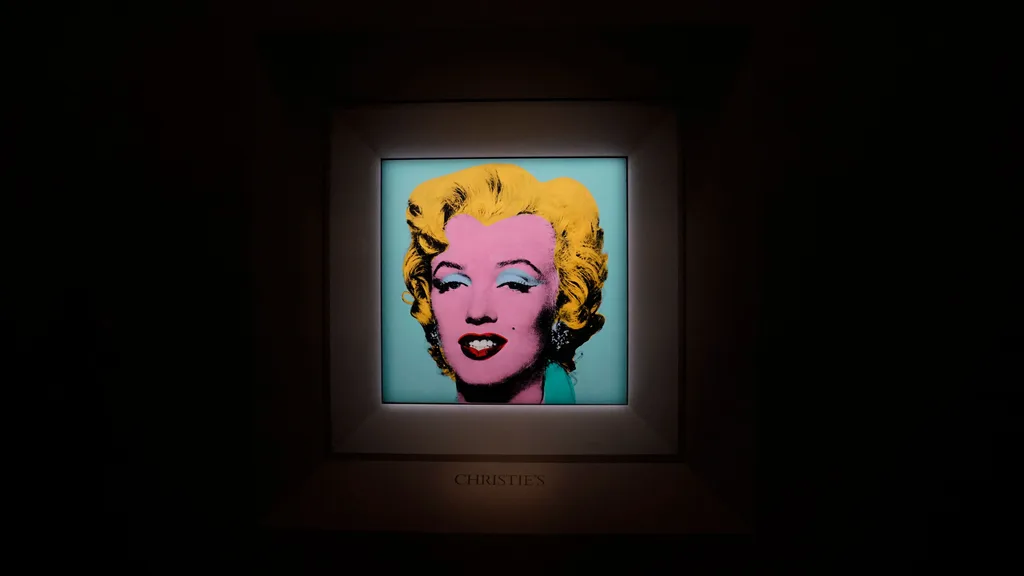
This portrait of Marilyn Monroe is among the most instantly recognisable images in post-war art. Warhol’s controlled palette, paired with the brutality of the screenprint process, distils the actress into pure cultural iconography. With its lauded status, it comes as no surprise it sold for $289 million.
Gustav Klimt, Lady with a Fan (1917–18)
Klimt’s final portrait, painted shortly before his death, reflects his late fascination with East Asian textiles and patterning. The sitter’s pose feels suspended between intimacy and theatre, a hallmark of his last works. The protait reached $166 million.
Mark Rothko, No. 6 (Violet, Green and Red) (1951)
A painting that demonstrates the full maturity of Rothko’s chromatic fields, where colour seems to hover rather than sit on the canvas. Works from this period are increasingly rare and remain pivotal to understanding mid-century American abstraction. It sold for $194 million.
Paul Cézanne, The Card Players (1892–93)
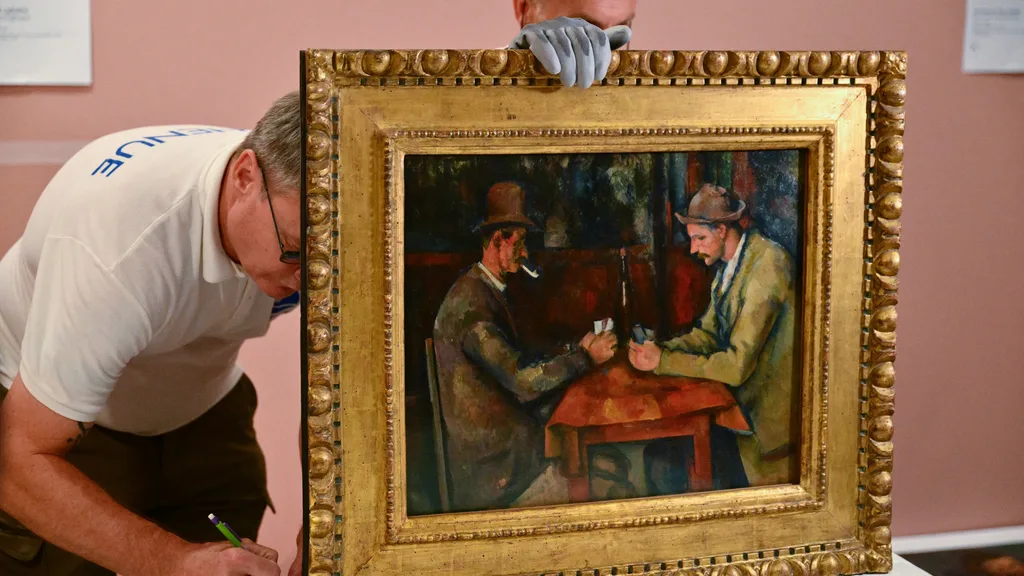
One of the most quietly radical paintings of the 19th century, Cézanne’s depiction of two men absorbed in a game conveys stability and structure through a rigorously constructed composition sold for $341 million. It helped reframe the foundations of modern art.
Jackson Pollock, Number 17A (1948)
Pollock’s 1948 works are the essence of his drip-painting breakthrough. Number 17A embodies the immediacy and controlled chaos that made him the figure of Abstract Expressionism and commanded $274 million.
Willem de Kooning, Interchange (1955)
Interchange sits at the moment de Kooning began shifting between abstraction and figuration, creating a kinetic surface that feels both spontaneous and deliberate. It is often cited as the most important work of his mid-1950s output. The painting sold for $467 million.
Francis Bacon, Three Studies of Lucian Freud (1969)
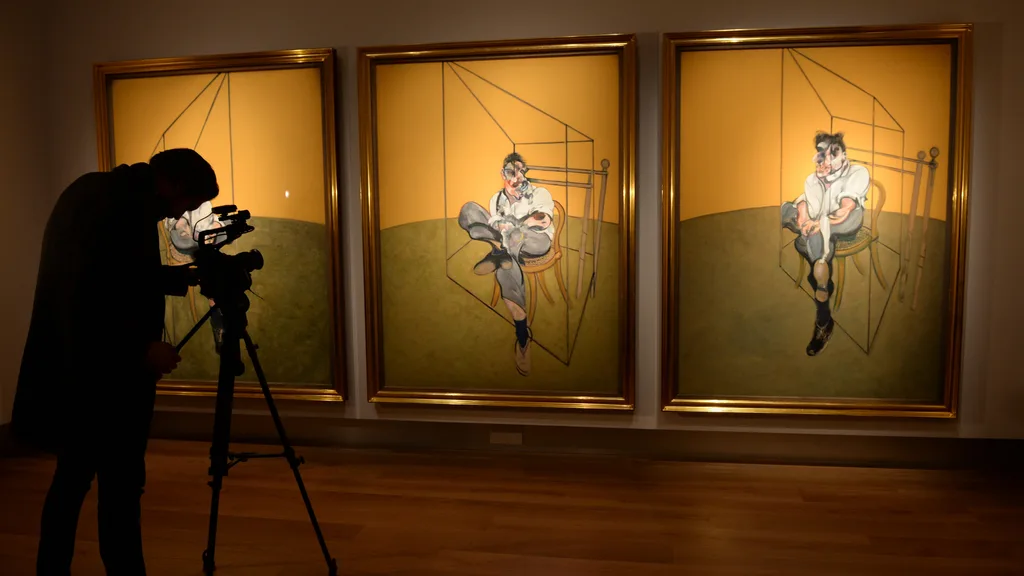
Bacon’s triptych of Lucian Freud is a psychological confrontation as much as a portrait. Each panel isolates Freud in a cage-like space, intensifying the fraught relationship between the two artists. The work sold for $215 million.

