






It isn’t an uncommon story: fashion house turned cultural institution. But when does a brand become more than its clothes?
Many creative directors have been seen pushing beyond the garments and into the rooms they inhabit. The set design itself becomes part of the experience and a reflection of the brand in full. And this fashion month, Spring/Summer 2026 season, designers have doubled down by transforming their runways into immersive worlds.
From Dario Vitale’s Versace debut in Milan’s stories Pinacoteca Ambrosiana, to Fendi’s pixelated dreamscape designed by Marc Newson, there’s no shortage of design inspiration both on, and off, the runway this fashion month.
All The Best Fashion Month Set Design Moments
Chanel
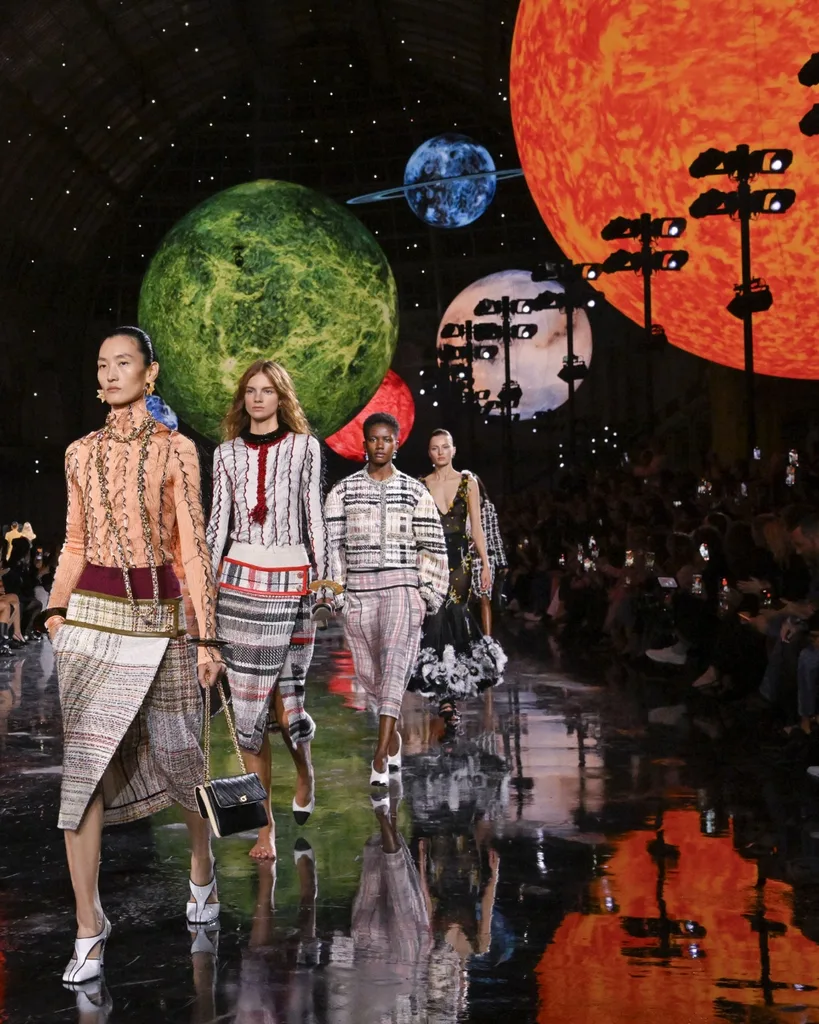
The Universe of Chanel, as referred to by new Artistic Director of Fashion Activities, Matthieu Blazy, exists “outside the usual constraints of space and time.” It’s fitting then, that for Blazy’s debut collection, an otherworldly backdrop was chosen to launch his long-awaited creative vision into the cultural stratosphere.
Giant orbs of light emerged from the runway to fill the steel-framed domes of the iconic set, as models paraded across the reflective ripples cast by the celestial path above – a cloak of glittering stars transforming the expansive Grand Palais into a planetarium for the momentous occasion.
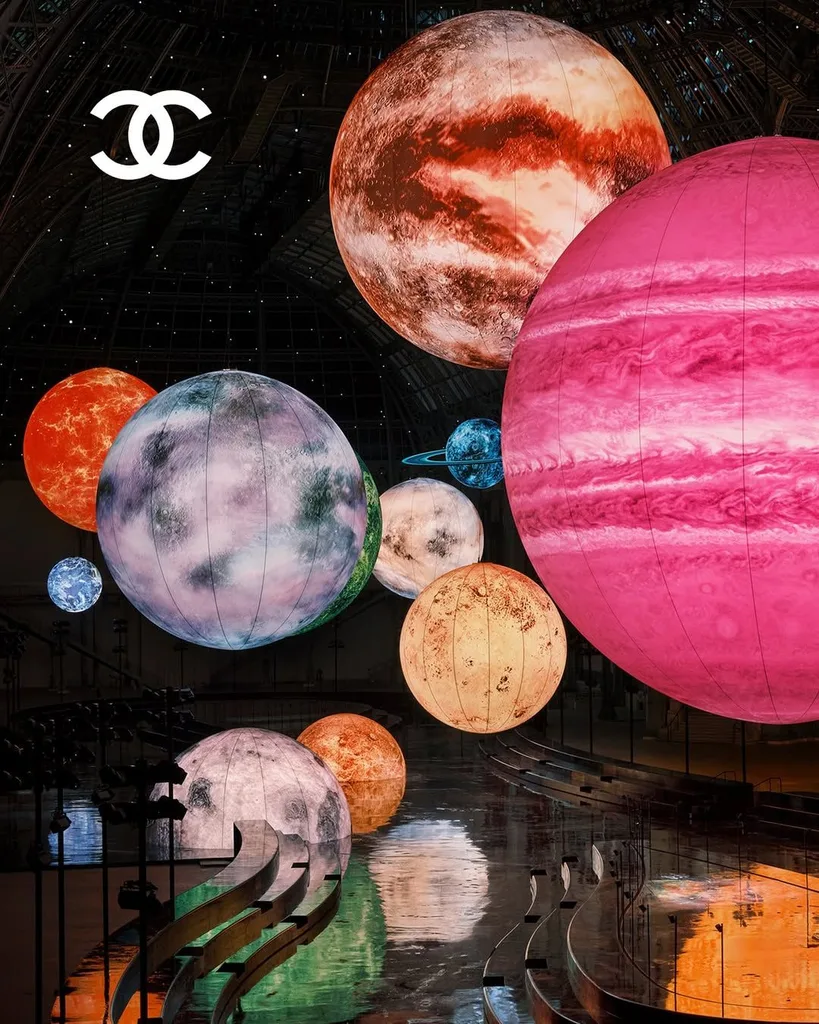
“For this first Chanel show, I wanted to do something quite universal, like a dream, something outside of time, and I was fascinated by the universe of stars, a theme so dear to the House,” wrote Blazy in a statement following the presentation. “We all observe the same sky, and I think it provokes the same emotions in us.”
The show was a triumphant return to the iconic fashion week sets of collections past, ushering in both a new creative vision and future focus that Chanel fans had been patiently waiting for.
Miu Miu
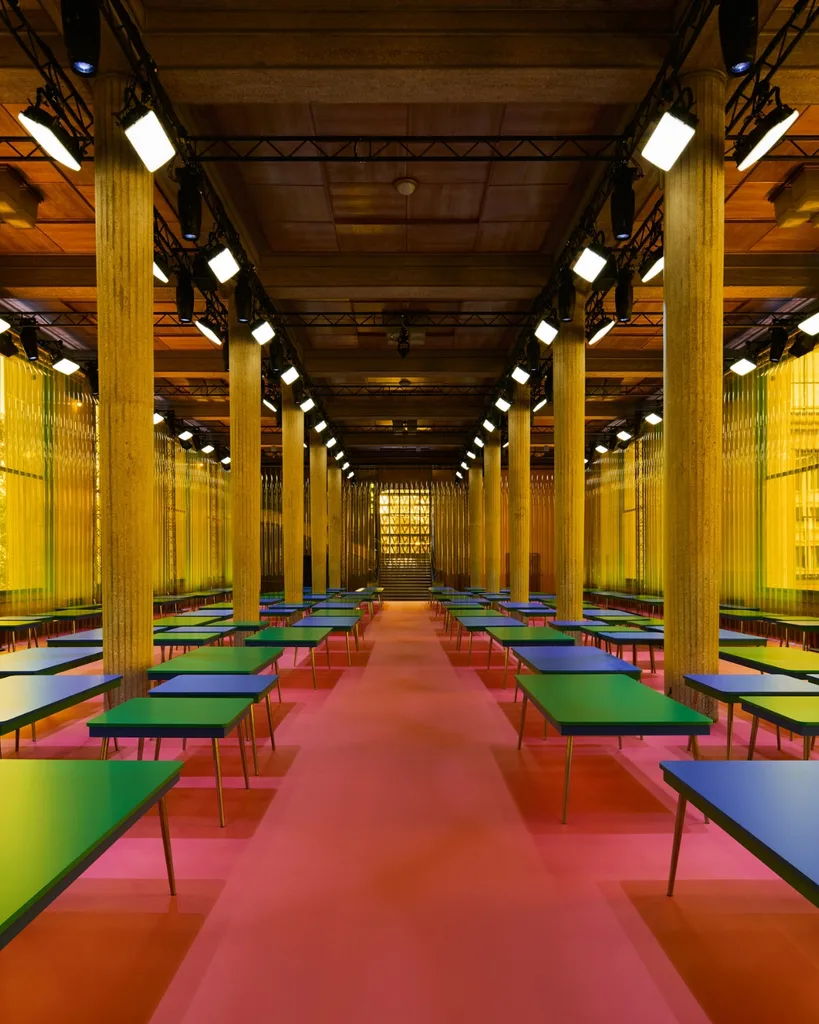
For Miu Miu’s Spring/Summer 2026 collection titled At Work, Miuccia Prada found inspiration in the industrial sentiment documented by photographers Dorothea Lange (1895-1965) and Helga Paris (1938-2024), whose work sought to express the reality of garments through a societal lens.
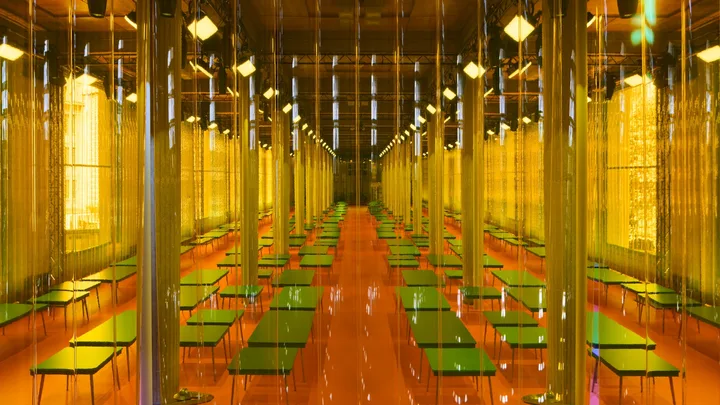
The architectural setting of Palais d’Iéna – itself a place of work – provided the primary-coloured framework for a fashion week set staged as a nostalgic nod to both the utilitarian and decorative aspects of the domestic sphere.
Guests entered through walls of PVC strip curtains that cast a near-fluorescent glow throughout the venue, where rows of colourful Formica tables awaited them in lieu of traditional runway seats.
Loewe
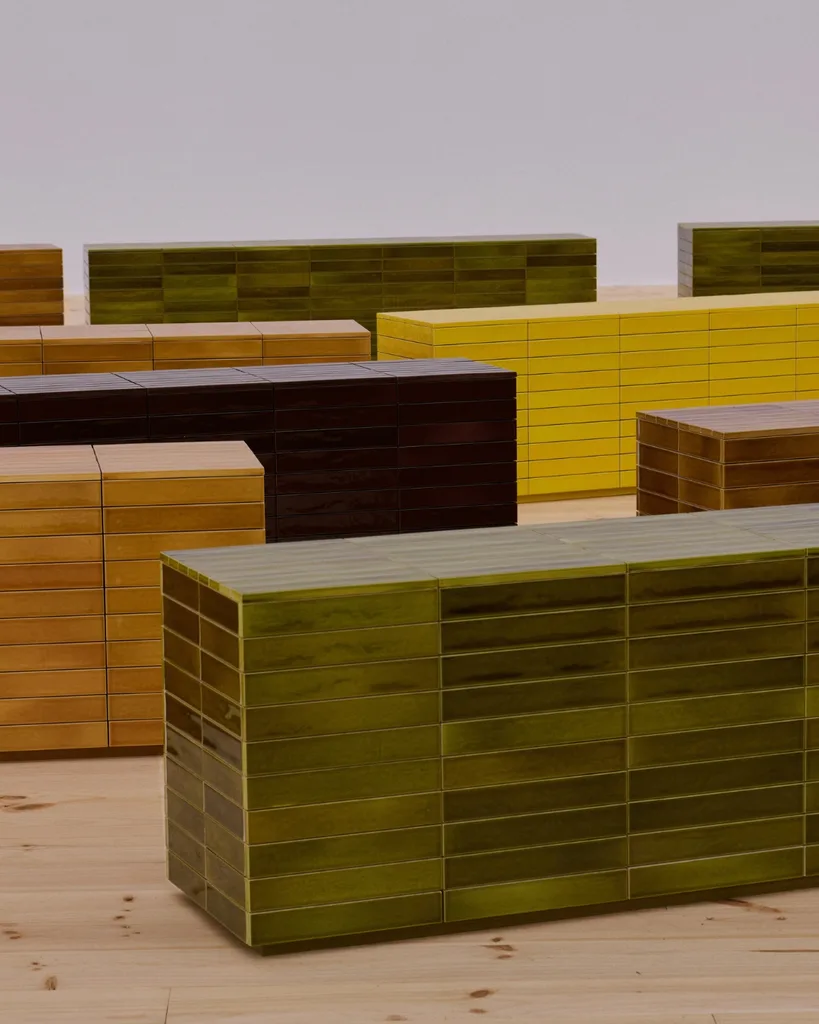
Jack McCollough and Lazaro Hernandez presented their debut collection for Loewe in a custom created exhibition space installed in the grounds of Parc Cité Internationale Universitaire de Paris.
A painting by abstract artist Ellsworth Kelly hung in the entryway to the venue – its palette offering the only hint of what was about to take place. But aside from the sartorial narrative presented by the ex-Proenza duo, we couldn’t take our eyes off the bench seats clad in glossy zellige tiles that provided a tonal counterpoint to the stream of technicoloured clothes that made their way down the runway.
Bottega Veneta
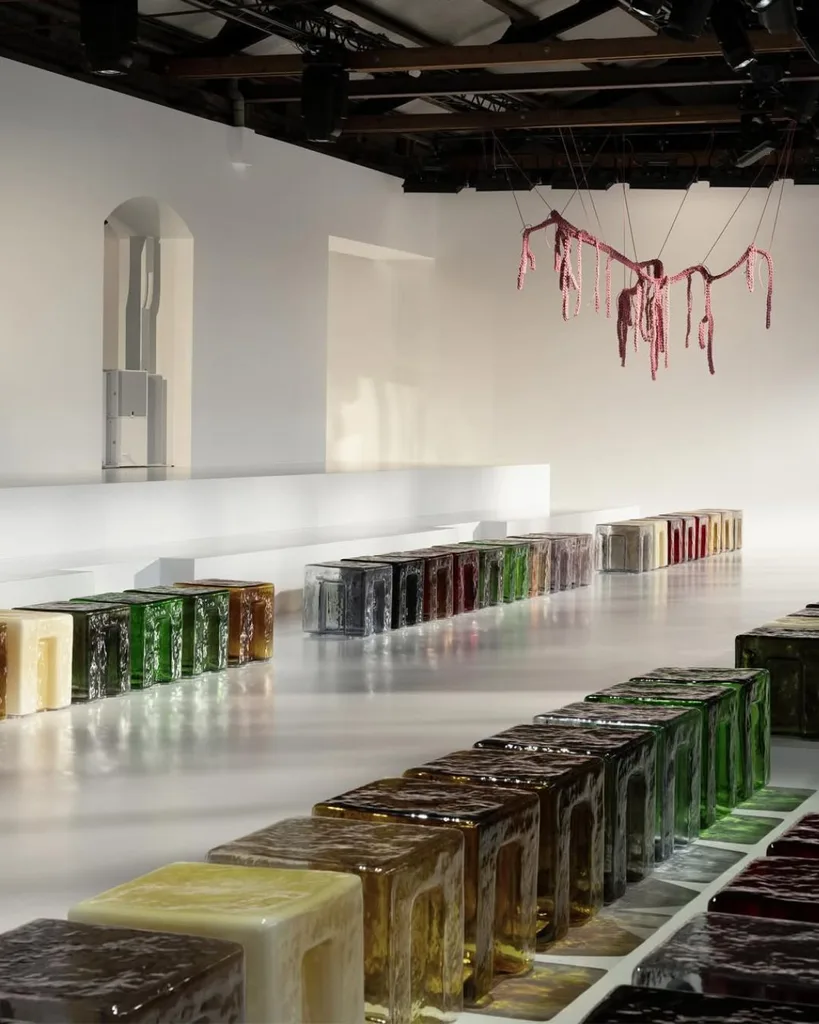
Bottega Veneta has form when it comes to set design. Last year, the runway was dotted with bean bag chairs – a playful reference to Zanotta’s iconic Sacco seat. Under the stewardship of Louise Trotter, the house reaffirmed its dedication to craftsmanship with an inspired collaboration with design brand 6:AM.
Guests entered a stark white space lined with Murano glass stools. Each one hand-blown into a cast-iron mould and finished with Computer Numerical Control technology to achieve a textured surface. Rendered in ten custom shades, the stools refracted light in shifting tones, with each piece taking a full day to manufacture. Four hundred days later, the scene had been set.
Fendi

For Spring/Summer 2026, Fendi enlisted Australian industrial designer Marc Newson to imagine its runway environment. This fashion month marked Newson’s first venture into set design. The result was a vast, pixelated terrain composed of 101 blocks of colour, forming undulating levels of seating around a winding runway. Abstracted from one of the collection’s floral motifs, the pattern was magnified beyond recognition.
Staged in the year of its centenary, Newson referenced the house’s heritage as a fur and leather atelier. The set was designed to emulate a patchwork quilt, or as Newson described it: “Like a giant blanket which became a kind of landscape. I thought it would be a really interesting idea to sort of scale it up into such an enormous space.”
Versace

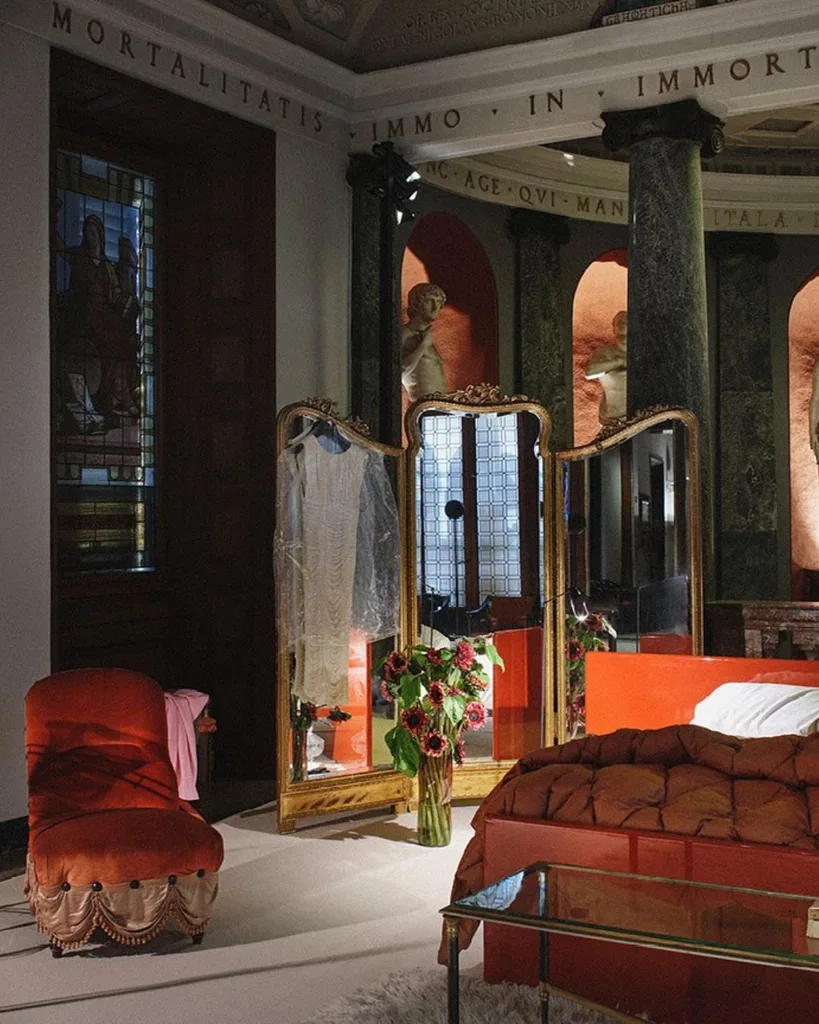
For his debut at Versace, Dario Vitale chose Milan’s Pinacoteca Ambrosiana, a 17th-century museum and library that houses works by Leonardo, Caravaggio and Raphael. The choice was hardly incidental: the institution was founded to make art and learning freely accessible, an ethos Vitale echoed in the show’s opening, where the exuberance of the 1980s emerged as a clear nod to Gianni Versace’s early collections, stirring nostalgia and debate.
Inside the opulent setting, once a private residence, the staging underlined this tension. Cabinets of antiquities framed a room in disarray: an unmade bed littered with empty glasses, an ashtray and packets of headache pills spilled across the floor. “The museum became a private residence, or a rather series of apartments, within the larger space. And there’s nothing more intimate than being invited to enter someone’s home,” the team at Versace reflected.
Burberry

For Spring/Summer 2026, Daniel Lee brought Burberry back to its former runway haunt, Perks Field in Kensington Gardens. The gabardine tent, long a stage for some of the brand’s most memorable shows, returned to frame a collection set against a chimerical sky. Burberry’s Spring/Summer 2026 collection drew on the connection between fashion and music – two forces that have shaped culture, challenged conventions and expressed a universal language of style. Outdoors and in, the earth-toned runway and seating cubes referenced the UK’s summer live music scene, while the duality of town and country ran through both setting and clothes.
Simone Rocha
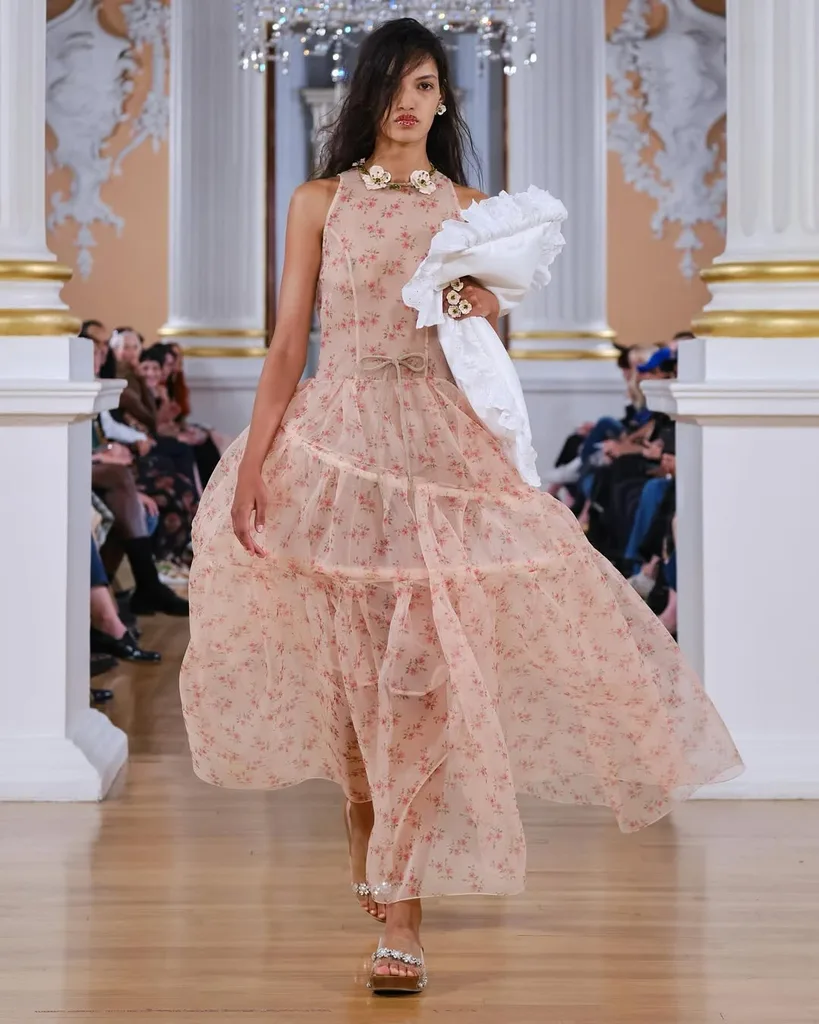
The romantic subversion of Simone Rocha was on full display for her Spring/Summer 2026 set design this fashion month. Built in 1739, the collection was staged at the official residence of the Lord Mayor, London’s Mansion House. True to form, Rocha situates her collections in high-establishment locations, creating moments that feel fitting and slightly out of place. “I love putting it somewhere where it looks like it should but maybe doesn’t belong,” she told Vogue Runway. Gold-drenched décor wrapped around winding stairwells, metallic-licked walls shimmering throughout, while upstairs, ethereal stained-glass windows and scattered statues lent the show a sense of otherworldly grandeur.
Louis Vuitton
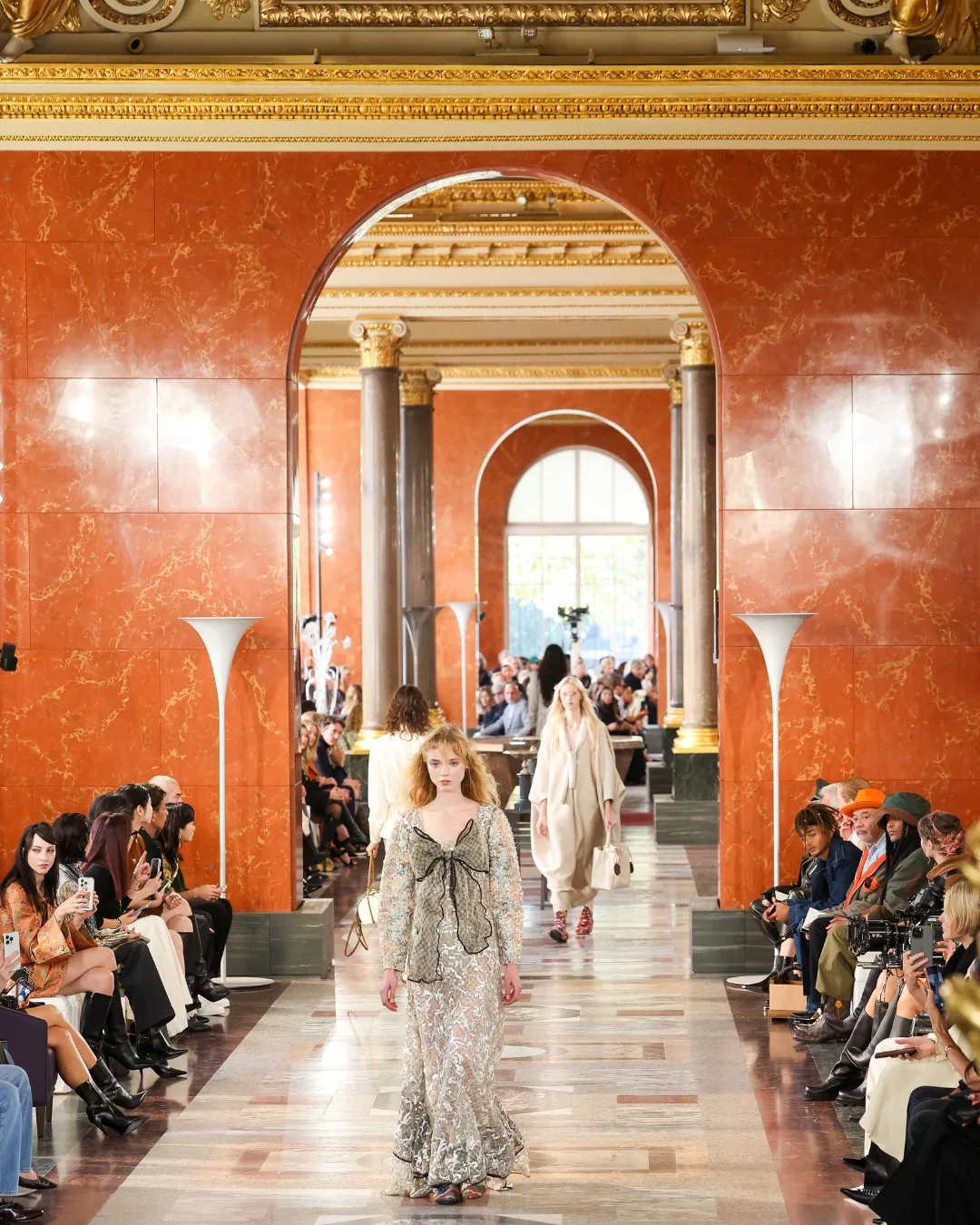
Louis Vuitton presented its Spring/Summer 2026 collection in the summer apartments of Anne of Austria at the musée du Louvre, a space whose walls have witnessed centuries of power and taste.
Collaborating with set designer Marie-Anne Derville, creative director Nicolas Ghesquière overlaid a contemporary apartment onto the historic interiors: 1930s chairs by Michel Dufet, 19th-century sculptures by Pierre-Adrien Dalpayrat and pieces of Derville’s own design jostled alongside 17th-century frescoes, red stucco walls from the 1930s and polychrome marble floors from the 19th century.
Acne Studios
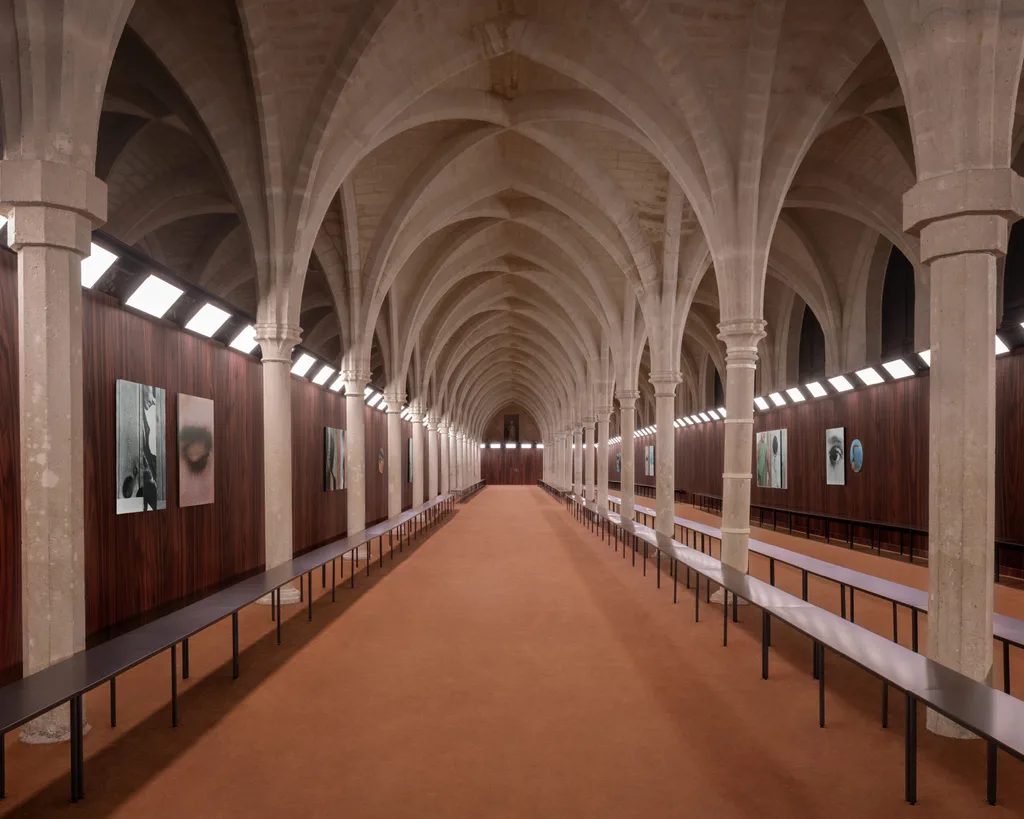
Inside the Collège des Bernardins, Acne Studios staged its show within a moody cigar salon set. Wood veneer walls and brown carpet conjured the interior of a cigar box. For the installation, the label turned to Brooklyn-based artist Pacifico Silano – well regarded in New York’s art scene yet little-known globally. His practice is shaped by two formative experiences: his parents’ ownership of an adult novelty store, and the death of his uncle from an AIDS-related illness while Silano was still in high school – a loss that went largely unspoken within his family. Silano began reworking archival printed matter from the years between the Stonewall riots and the height of the AIDS crisis. The resulting collages fragment and refract narratives of queer desire and loss. At Acne Studios, the archive artworks were joined by new works, suspended through the church’s vaulted arches.

