





 Photography: Anson Smart | Styling: Jack Milenkovic
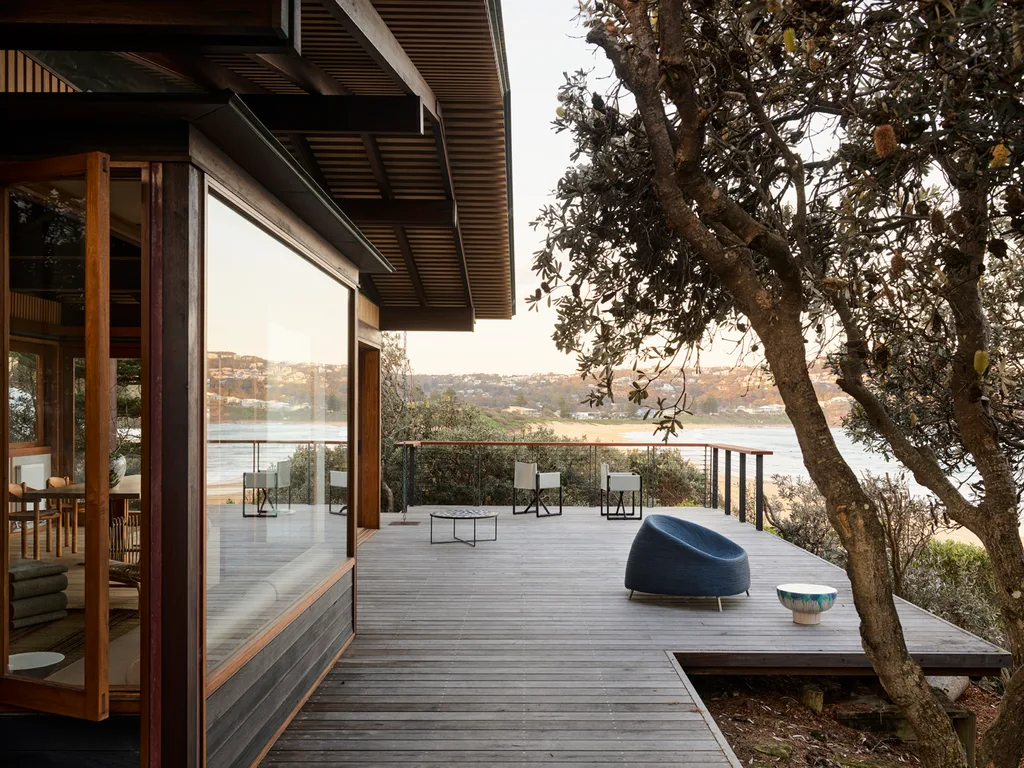
With its hand-crafted timbers, sliding walls and textured mats, this Zen retreat, known as Dune Dweller House, is the inspired creation of architect Jorge Hrdina – a confessed Japanophile who fell in love with this enlightened style of building on a visit to the Land of the Rising Sun. Who would have thought that such a sense of calm could pervade a home poised over the mercurial NSW Central Coast? Part of the secret is that it has two sides – one scans the ocean while the leeward side embraces a cosy courtyard and bushland views.

From a weekender down the road, the owners had long eyed up the property, which sits on a sand dune 20 metres above the beach and was at the time occupied by a ho-hum project home. In 2016, it came on the market and, after signing on the dotted line, they asked Jorge to build them their forever home. Having holidayed locally for some years, they had no illusions about what the exposed location could throw at them. “We knew the movements of the sun and where the prevailing winds came from. The harsh winds and salt-laden air can annihilate building materials,” says the owner.
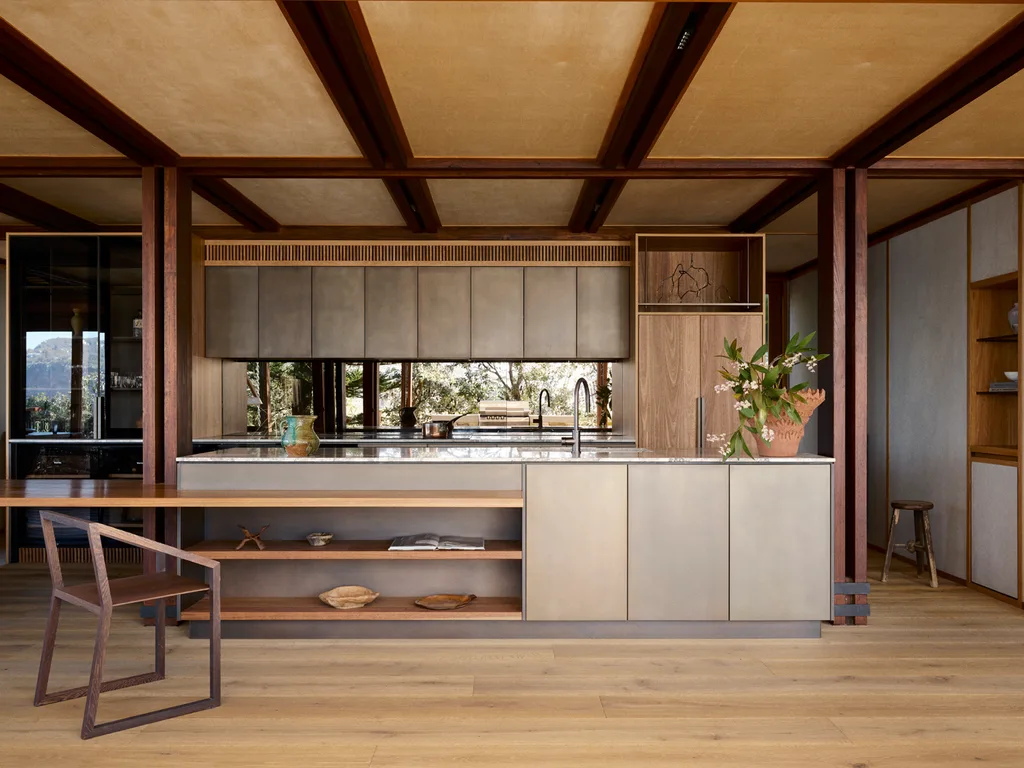
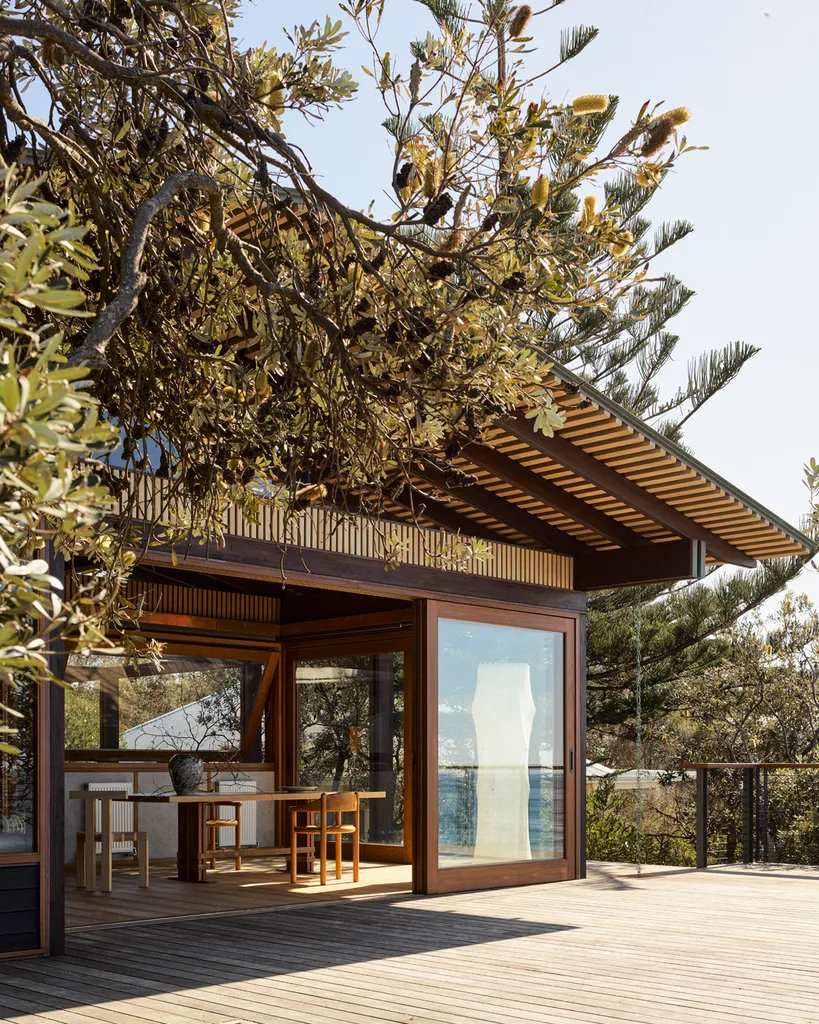
That knowledge informed the brief for a new two-storey, three-bedroom house on the eastern oceanfront and a separate two-bedroom cottage across a courtyard on the western side. “It had to blend into the headland, so you can’t see it from the beach, with timber, off-form concrete, sandstone and copper (on the roof),” says the owner. “We wanted an indoor/outdoor feel with the downstairs fully open with sliders to the outside, but with separate spaces, such as a study for me and a media room for my wife. And the back, looking to the hinterland, would offer shelter and sunsets.”
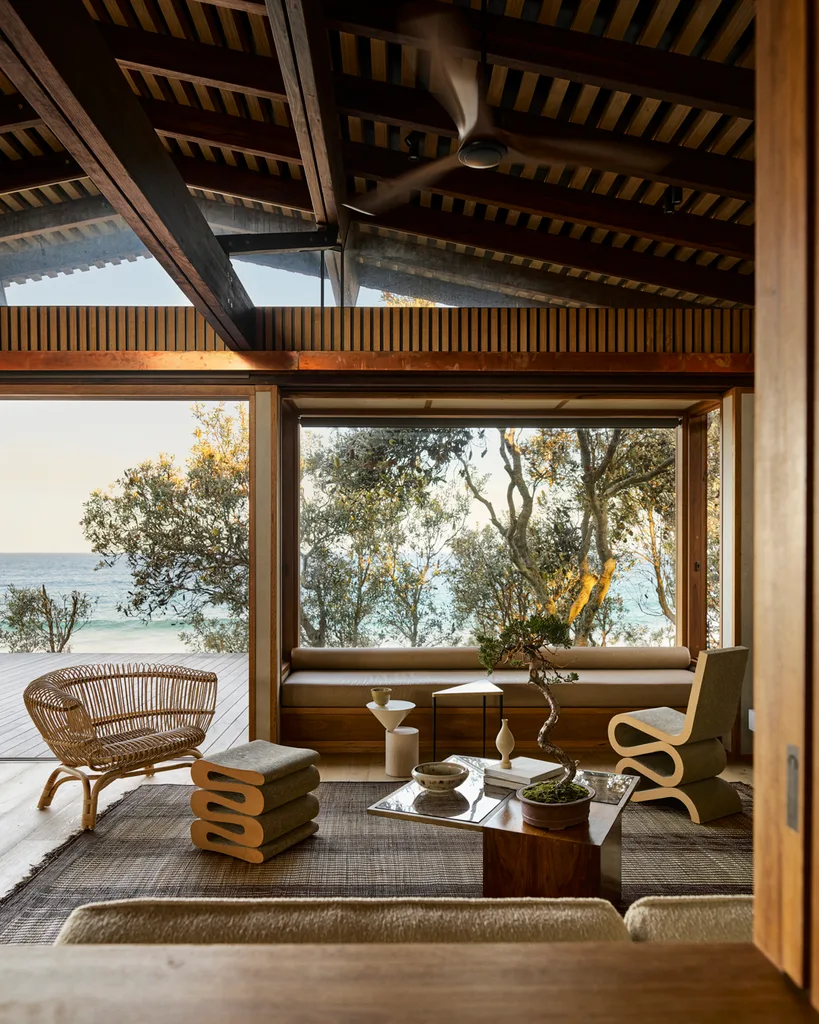
A courtyard that offers protection from summer northeasterlies and access to winter sun was another must-have. It also had to hunker down and harmonise with the dune by having a modest profile and exploring natural materials. That sand dune, with the ever-present threat of erosion in the area, would call for a unique design solution. “As the site was perilously close to the waves and sitting on only sand, the idea of a wharf came to mind,” says Jorge. “Wharves straddle both solid land and the sea. From this, I developed a modern interpretation with wharf posts expressed both internally and externally.”
Those handsome posts would also be structurally beneficial, mitigating the threat of erosion. Jorge placed the house close to the sea by utilising the existing slab. Behind that, the 15-metre posts were burrowed five-storeys-deep into the sand. Also like a wharf, the house features a central circulation spine, with spaces left and right, on a journey to the ocean. “Having been to Japan, I was very impressed with their timber structures and capacity to last many centuries,” says Jorge. “That timeless aesthetic is linked to their ancient traditions.”

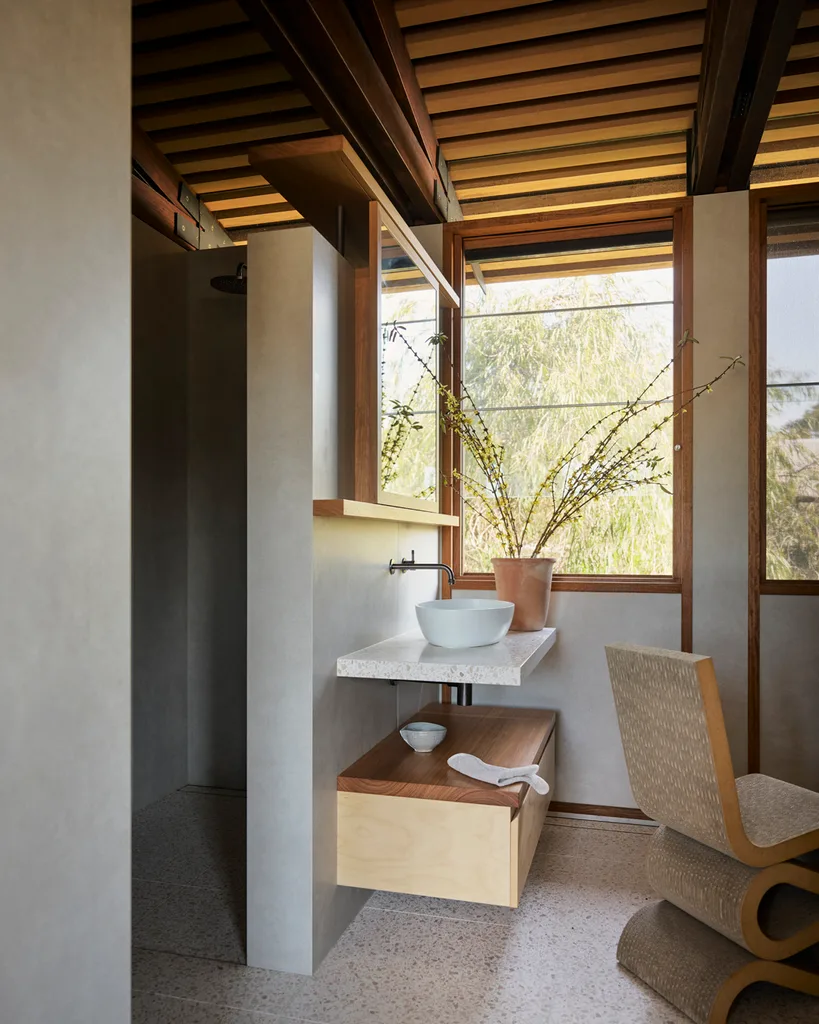
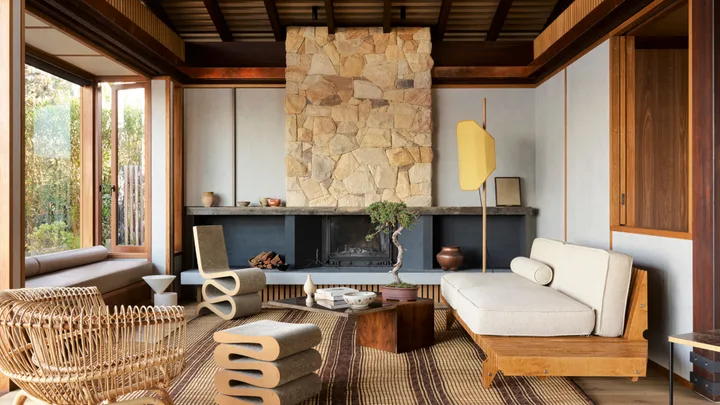
In Jorge’s case, his hand-crafted structure became the decoration, expressed literally in nuts and bolts. “The whole building is almost intuited as a piece of joinery,” he adds. He had the laminated Victorian ash posts and beams custom-made, along with the stainless-steel bolts that fasten handsome black steel straps around the base of the posts. Jorge also thinned down the rafters with black steel plates, resulting in a super-chic and svelte wharf aesthetic. Instead of plasterboard, he used a light beech plywood veneer and raw cementitious wall panelling to add depth and texture while referencing traditional Japanese building styles.
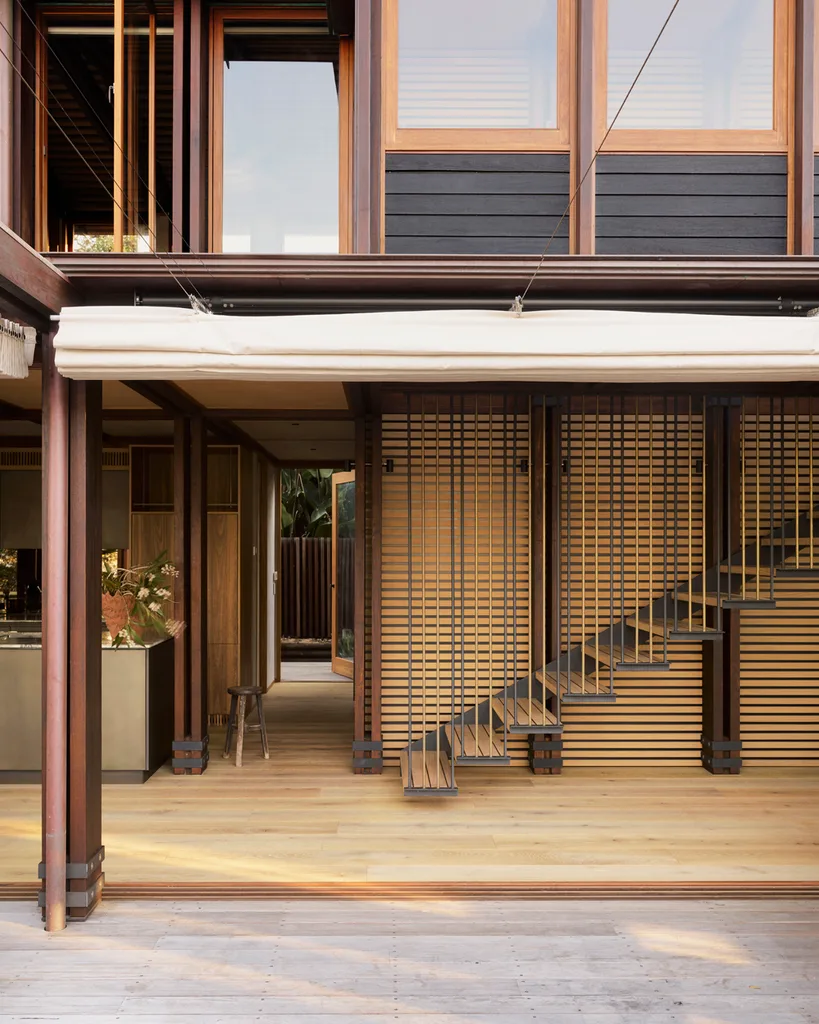
A floating stair, together with battens expressed in screens and sliding walls, creates an airy lightness and warmth throughout.
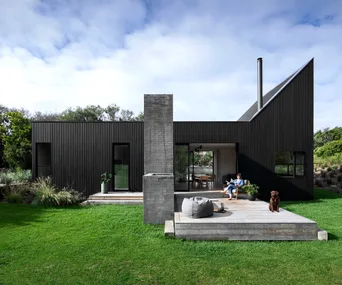
As well as blending beautifully with the seaside setting, the robust, raw materials withstand the harsh seaside conditions and some even thrive in them. The Victorian ash posts and blackbutt windows require infrequent oiling, the Shou Sugi Ban charred timber cladding (Japanese, of course) will last decades without attention, and the copper roofing will be immune to the salty air as it patinas attractively.
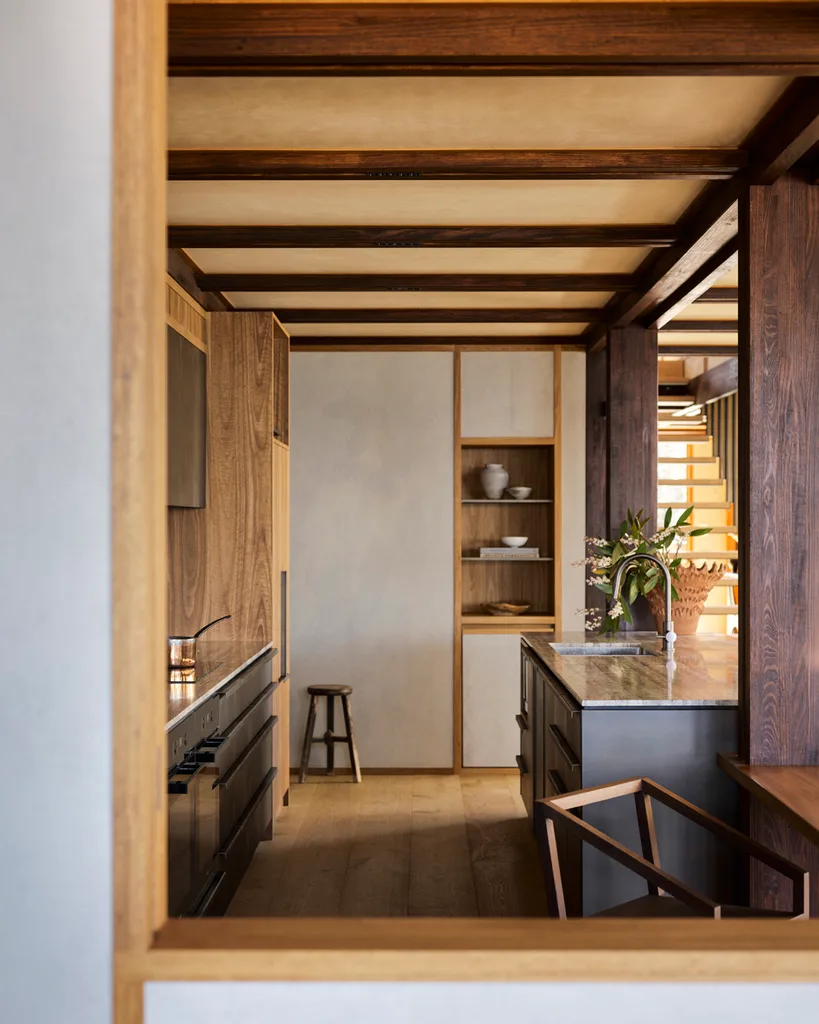
Similarly, the Accoya engineered-timber ceiling battens were chosen for their durability, in a light colour that takes its cues from the beach. The wide French oak flooring with a distressed finish “reflects the ruggedness and feeling of walking on sand,” says Jorge. “The natural materials and colour palette let the sea and sand dune do the talking. I love how the house looks like it was always there and will get better with time.”
“It’s a piece of livable art. Every aspect is beautiful, with exquisite finishes,” says the owner. “The oak flooring is great for walking on barefoot yet not tippy-toey because it doesn’t need to be nurtured. This isn’t a resort, just a comfortable beachside home.”
The Design Team
Jorge Hrdina: jorgehrdina.com