





 Photography: Prue Ruscoe | Styling: David Harrison
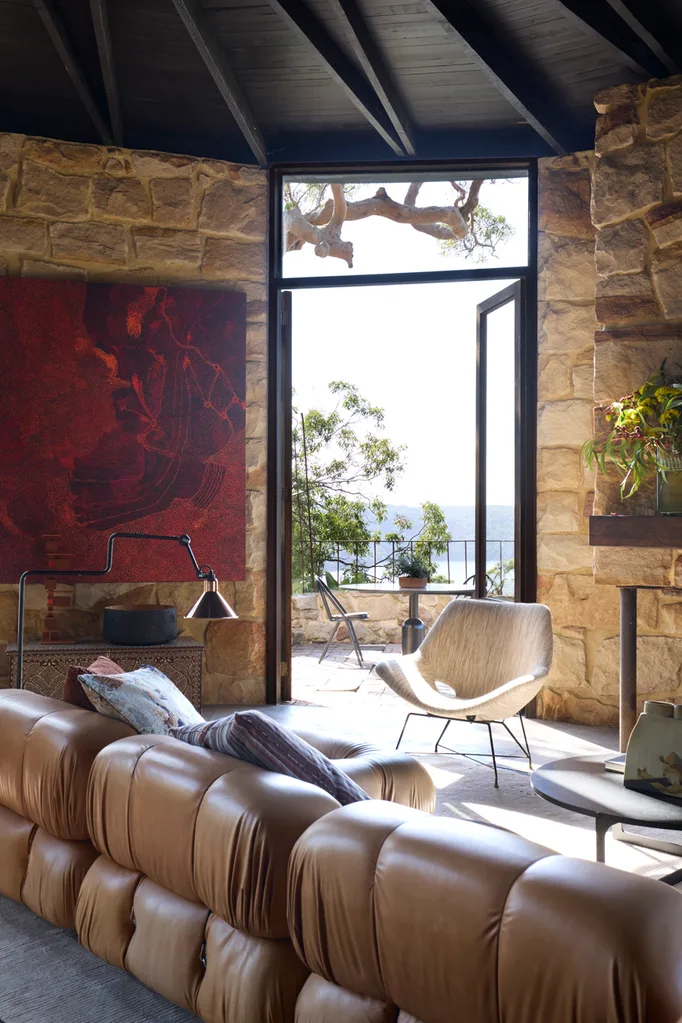
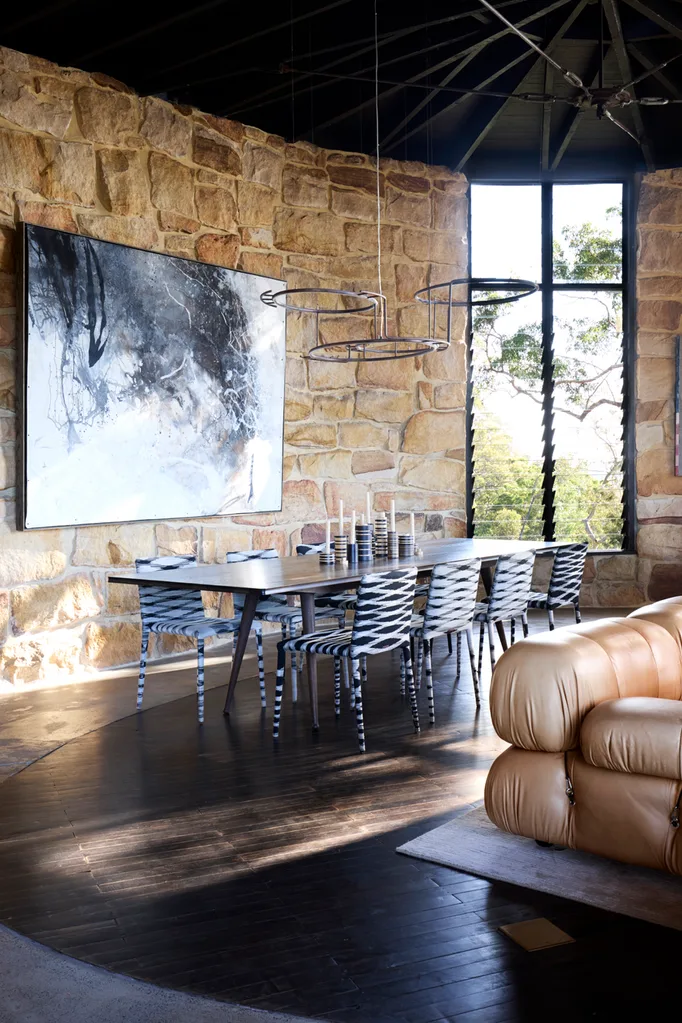
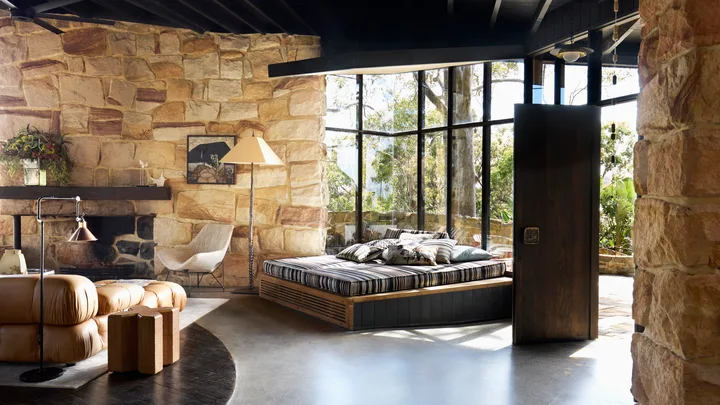
A rare architectural alchemy occurs when site, house, owner and architect align in deeply meaningful ways. Babylon House, perched on an escarpment on Sydney’s northern beaches, is such a case – its spectacular 280-degree water views, ancient rock shelves and towering angophoras creating a naturally dramatic stage. Built between 1952 and 1958 by architect Edwin Kingsbury, the original house was a bohemian experiment; majestic curved four-metre stone walls in single-skin masonry and a bowstring truss in the ceiling expressed with tectonic simplicity were bold propositions of their time.
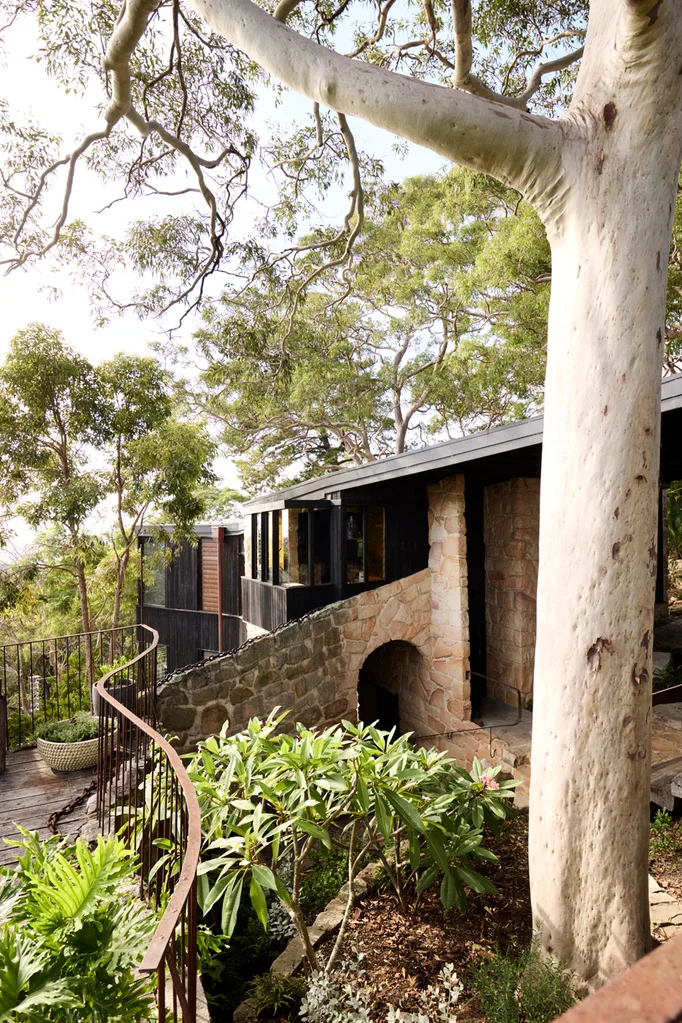
For Fiona Spence and Morris Lyda, buying the house was a matter of timing. “It was on the market for years – it waited for us,” says Fiona. When they arrived, they felt an energy beyond the visual. “Magic,” she calls it. “And magic is really hard to find.”
Recognising potential is one thing; embracing a vision – and funding it – is quite another. An ally came in the form of architect Rob Brown, design principal at Casey Brown Architecture. “I’d visited the house 15 years earlier,” he recalls. “Even then, it felt like some medieval ruin: powerful and poetic.” When Fiona approached him through his wife, Caroline Casey, a strong creative connection formed. “He was the right architect for the house,” says Fiona. “Not just for me.”
The shared challenge was to restore, reimagine and reinhabit the house without diluting its essence. “We didn’t want to impose,” says Rob. “Our aim was to understand what the house wanted.”
That process took eight years of slow, deliberate decision-making. “We started fast,” says Fiona, “but the house had other ideas and in the end we had to listen.” Many choices were made onsite, measuring tape in hand, sightlines assessed from the bed position, ideas trialled, shifted and refined.
Access posed an immediate obstacle as the steep, vegetated site defied traditional logistics. The solutions were genius: a private cable-car system sourced from Seattle, and a rock-and-roll-style flying fox designed by Morris using rigging techniques honed through years in global stage production. These bespoke systems allowed materials, trades – and even stone slabs – to arrive with precision and minimal environmental disruption.
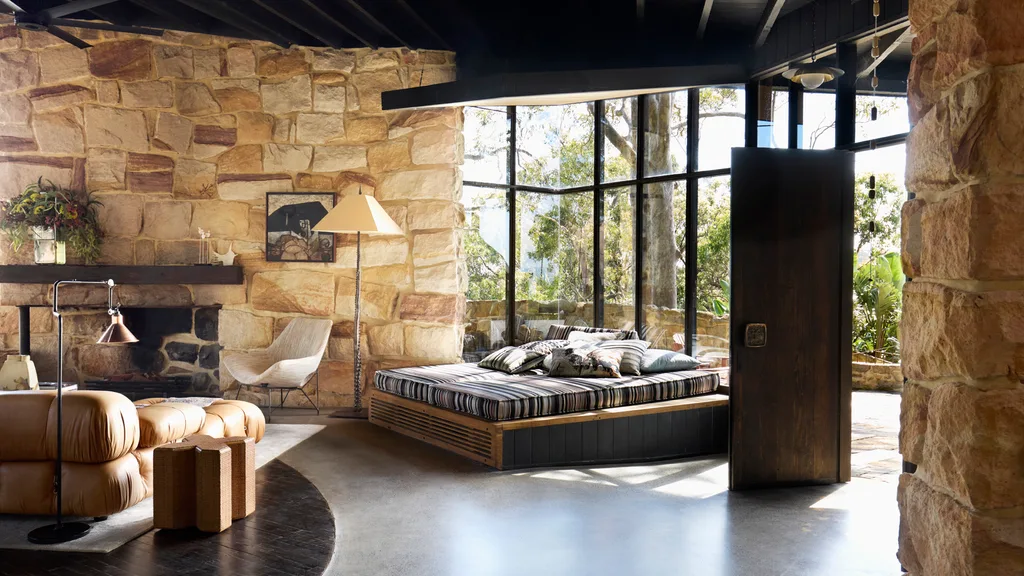
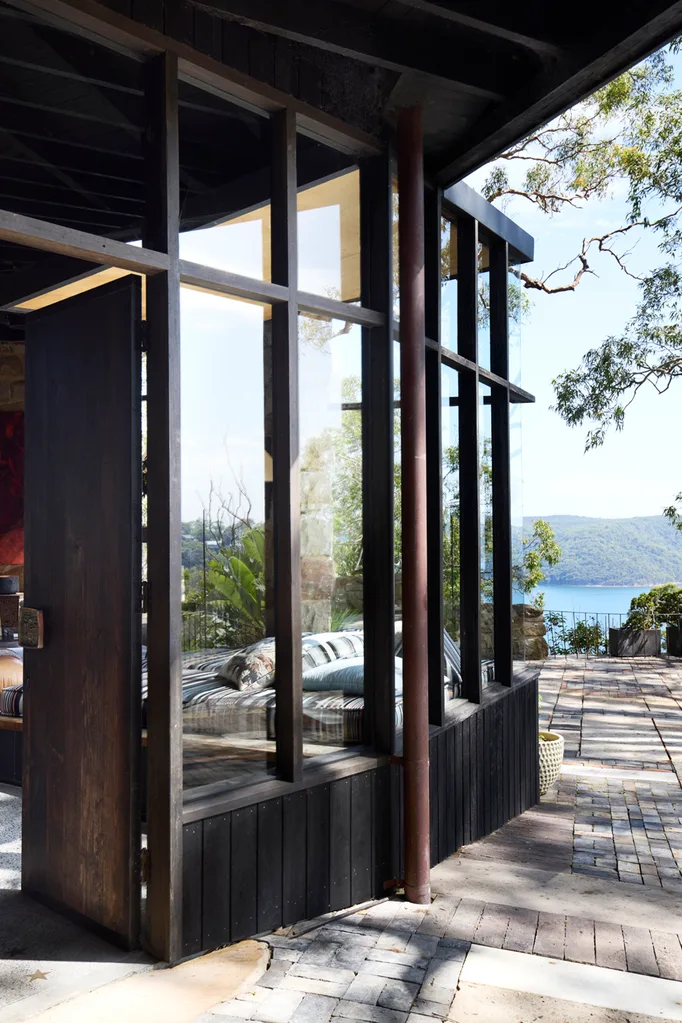
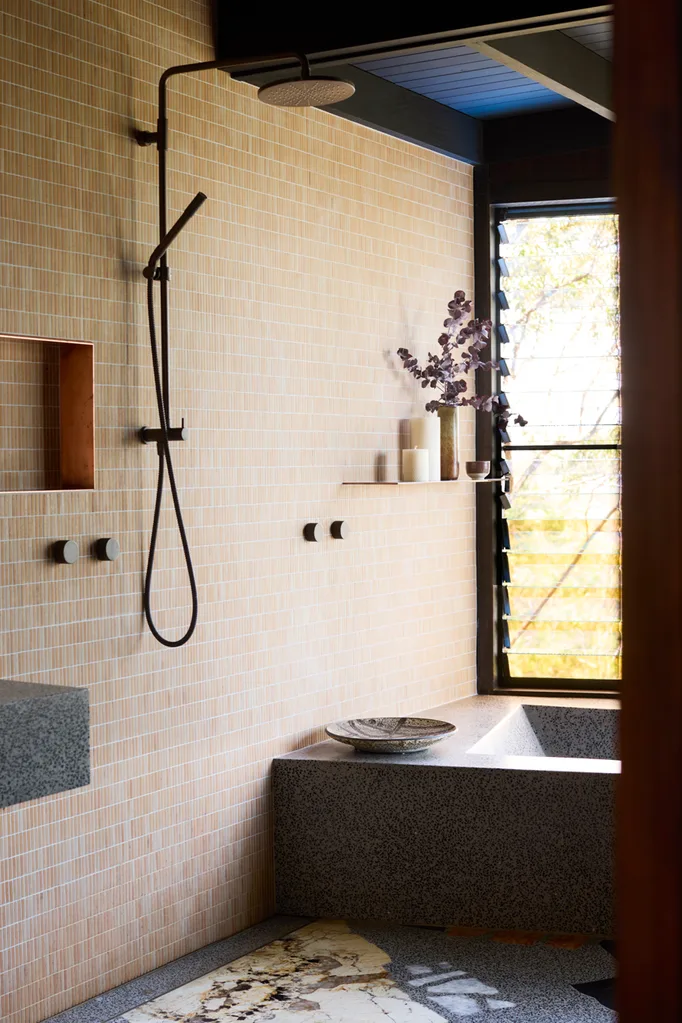
Restoration was equal parts architectural and archaeological. The original bow truss roof was re-engineered, stone walls repointed, and windows finally installed where once only imagined. The new additions (bedroom, bathroom and study) don’t mimic but rather extend the language of the original. “We weren’t replicating,” Rob explains. “We were adding a chapter in a conversation with what already existed.”
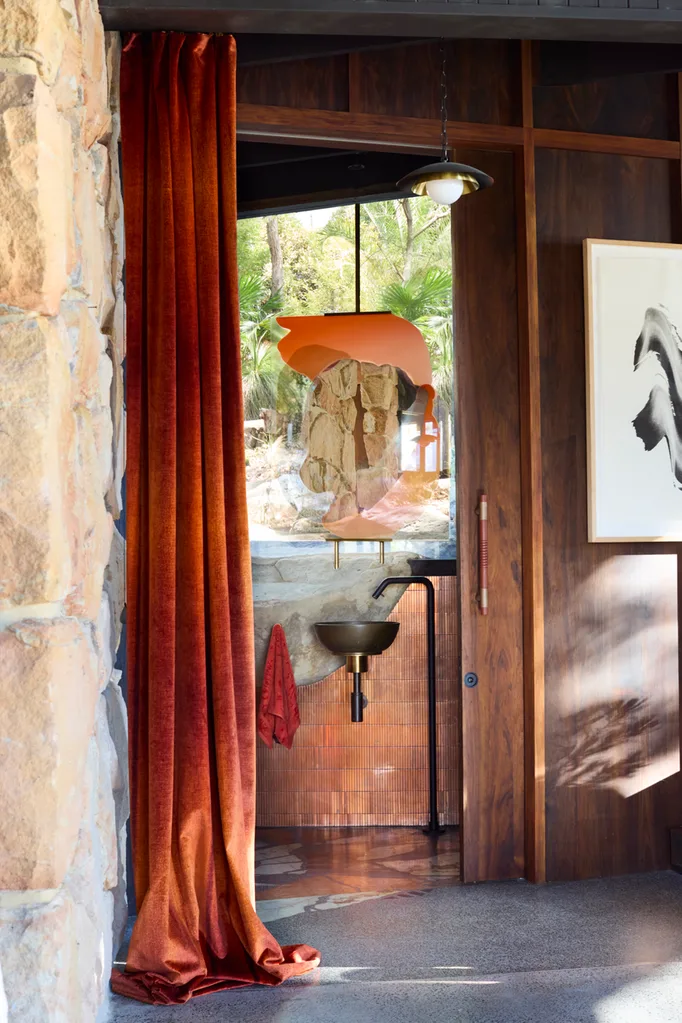
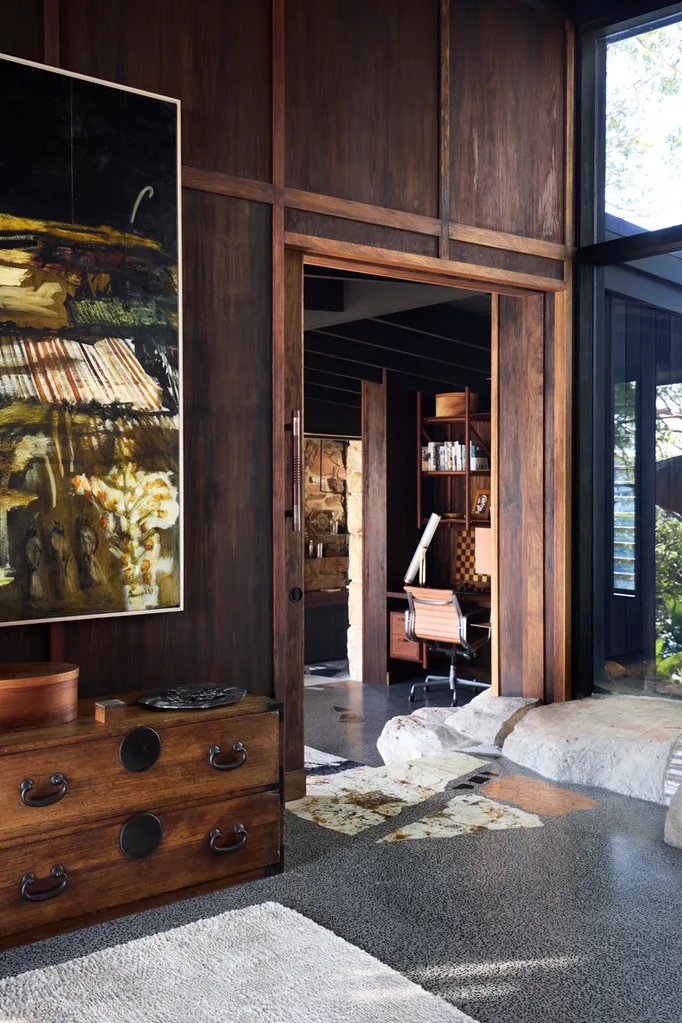
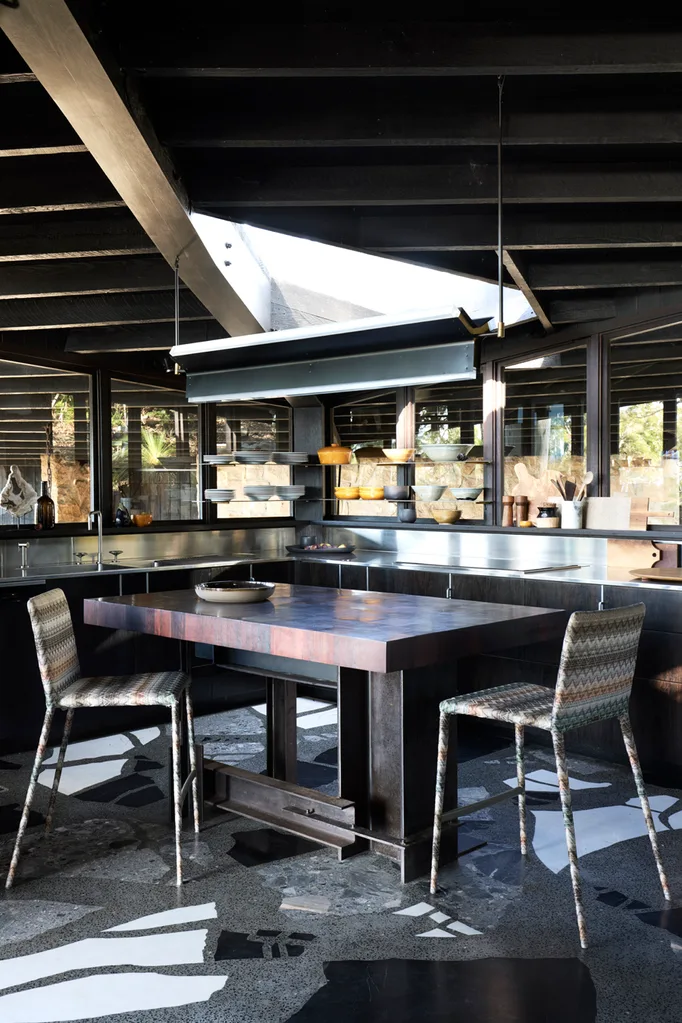
That conversation unfolds through materiality. Stone meets terrazzo, hand-waxed copper glows beside timber, blackened ceilings frame shafts of sculpted light.
“There’s an idea of leaning into unpredictability,” Fiona notes. “There are moments when the house still surprises.” Nowhere is this more apparent than in the way the house melds with the land. Instead of resisting the rock shelves, the design absorbs them. A boulder punctuates the powder room; another becomes part of the study wall. In the new wing, glass slices into the rockface with elegant precision. Fiona was involved at every stage, down to the smallest details. “Those vintage bronze door handles kickstarted the whole aesthetic,” she points out.
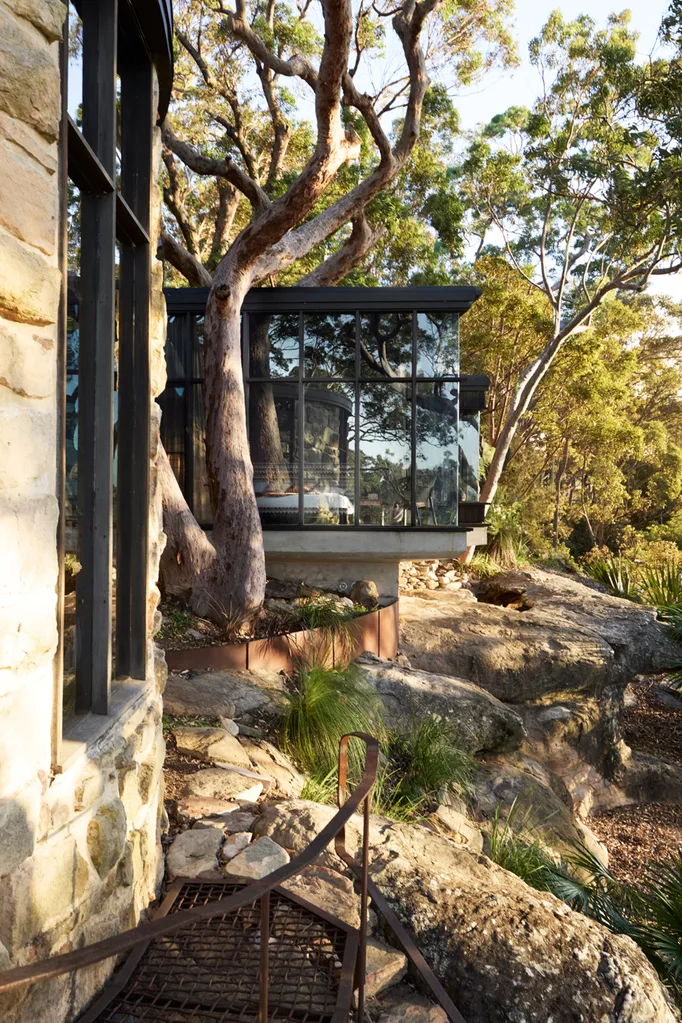
The creative relationship between Fiona, Morris and Rob was intense – collaborative, sometimes combative, but always productive. “Three very opinionated people,” says Fiona. “But the result is more than any one of us could have envisioned.”
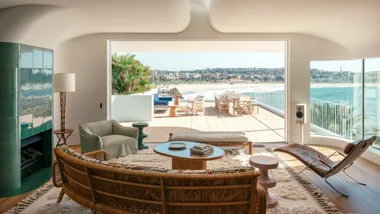
There’s a natural theatricality to the house: the sweeping terrace that frames both Pittwater and the Pacific, the cantilevered bedroom that captures the sunrise, the arrival via cable car which allows a slow perspective on the house and sense of intimacy with the landscape in which it sits. But it’s theatre grounded in experience, shaped by sensitivity to light, air, views and the natural contours of the site.
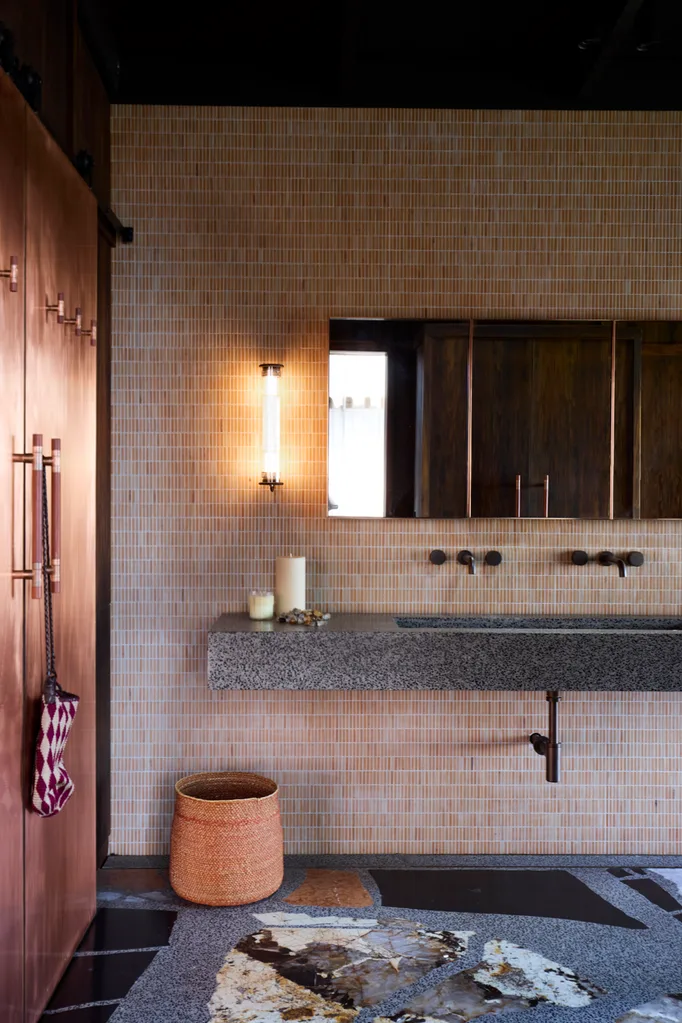
Most remarkable is how the new work evokes the original without being beholden to it. “It had to feel like it could always have been there,” says Rob. “A variation, not a replica.”
This is architecture not only of site, but of time – the years it took for the house to be rediscovered and reimagined. Each room evokes the rhythm of the original, with black timber ceilings, stone walls and a floor plan that moves with the land’s natural fall.
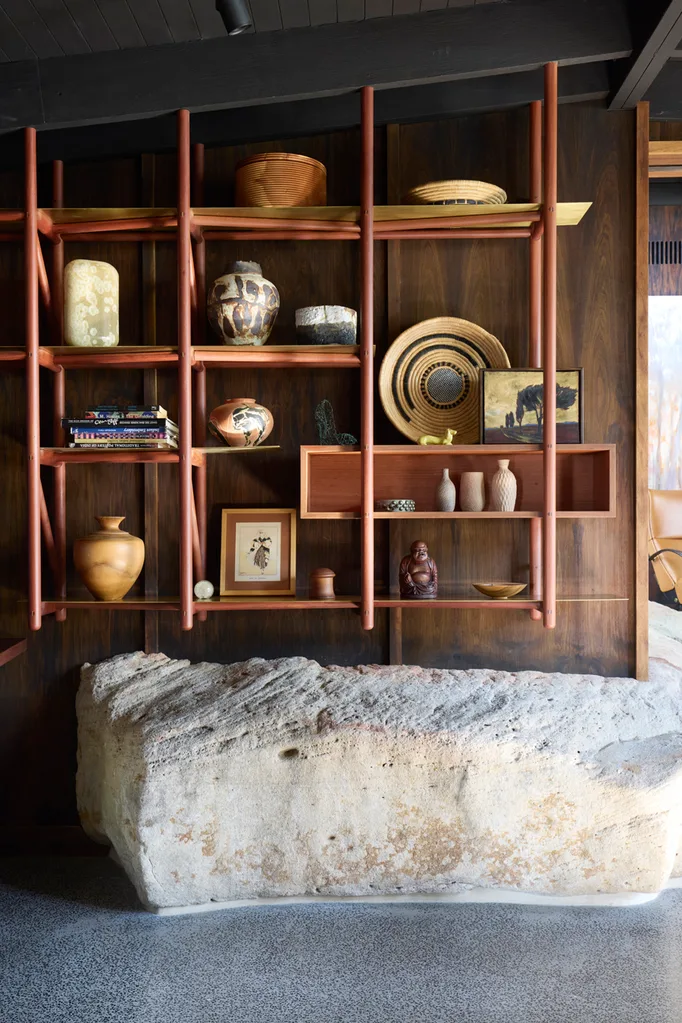
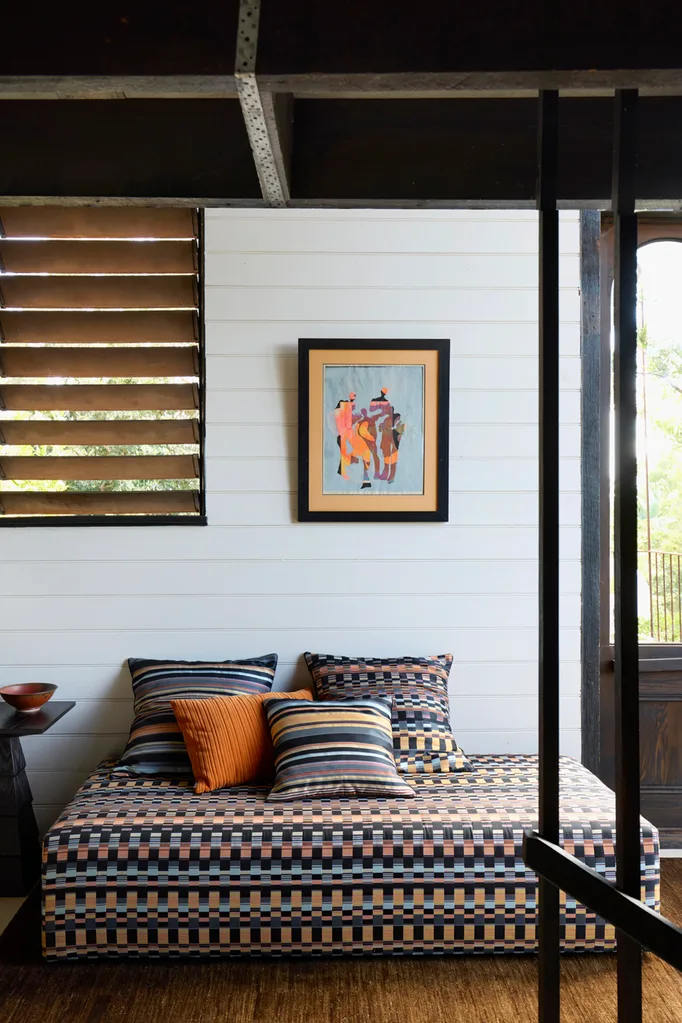
The interiors, which won the John Verge Award for Interior Architecture at the 2025 NSW Architecture Awards, are shaped by Fiona’s longstanding collection of art, furniture, ceramics and textiles, many from her own brand, Innate. The layered richness of materials is in tune with the building and the land, tying it all together.
“This place is more than a house,” Fiona reflects. “It’s a kind of living history – a story we have joined, not written from scratch.”
The Design Team
Innate Collection: innatecollection.com
Casey Brown Architecture: caseybrown.com