






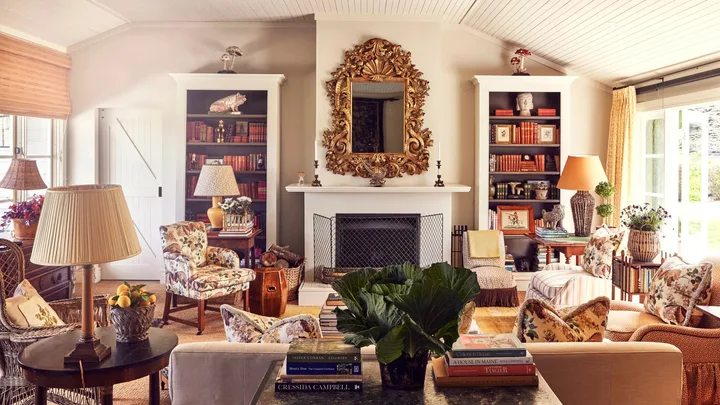
 Photography: Alana Landsberry
Welcome to Overheard, where mother-daughter duo Melissa and Isabella offer generational takes on home-life dilemmas overheard from perfect strangers.
In Sweden, the concept of consciously stripping back your worldly possessions in your later years is considered a kindness to your next of kin. Known as Döstädning or “Swedish Death Cleaning“, it’s about keeping hold of the possessions that matter and letting go of what doesn’t to create a space of clarity and harmony. For many, it has become about reckoning with our attachment to physical things, reassessing the necessity of our so-thought beloved items and relieving the burden on our family members after our passing.
Isabella: I am not a particularly nostalgic person and religiously do stocktake and seasonal chuck-outs of belongings at home – much to the dismay of my husband, who is constantly asking where everything has disappeared to. I find it deeply therapeutic to cull pieces, and this is not limited to physical items. A digital cleanse is just as good for the soul. I consider my digital footprint too: subscriptions, stocks, iCloud and camera rolls. Do I need it all? I make digital photo albums at the end of every year, so my son can enjoy them one day, then I simply let the rest go.
When I am on a cleaning rampage, I am brutal but practical. If I haven’t worn a dress, used a face cream or sat in a chair, it’s out. That’s not to say I don’t keep the good stuff and enjoy it daily. I use my mother’s wedding china (Wedgwood ‘Wild Strawberry’) every day, which, mind you, she wanted to bin. Go figure.
“Preparing your belongings so your next of kin are spared the task is an elegant way to honour a life well lived.”
ISABELLA WALKER-SMITH
Ask yourself: does it matter to me in this life and will it matter in generations to come? Does it bring me pleasure and will it bring the next generation any joy or value? When my fabulous maternal grandmother recently died, I was shocked by the sheer magnitude of belongings she left behind. She was a serious collector of pieces spanning every continent and century. I broke my own rule with an overwhelming desire to keep everything in sight to remember her. But rather than stashing away boxes of items, I settled on keeping a few beautiful ancestral portraits and called it a day.
Preparing your belongings so your next of kin are spared the task is an elegant way to honour a life well lived. In Sweden, it’s rather bluntly called death cleaning, or döstädning – essentially decluttering your life to ease the burden on your loved ones later. My take? Give your family the gift of lightness: an organised curated collection of meaningful items they will treasure.

Melissa: The recent process of clearing out family pieces from my parents’ fabulous house made me realise lifelong family heirlooms can look very different when we try to pass them on. I offered younger family members wonderful wares, which they all politely declined. “No space now, maybe later.”
There were Georgian wine glasses, antique Persian rugs and rare framed artworks collected from around the world. Could these items and my family’s memory of them find a place in my daughter’s new Melbourne home? She already had her own preferred equivalents, reminding me that younger generations make their own choices. More to the point, they aren’t hoarders. They take only what they need now.
“I am eager to part with my stuff from a desire to get on with my life. I want experiences, not masses of things. I only keep items I love.”
MELISSA PENFOLD
My darling mother was a galaxy-class collector known for her extravagance. If she loved a shirt, she’d buy 10 of them. In her wardrobe, there were probably enough cream silk Armani shirts for everyone reading this. She was resistant to decluttering before she died, showing no interest in combing through her vast collections of silver, porcelain and jewellery.
I’m all for tackling the chore now, while I’m still here to make the decisions. Simply put, it’s a courtesy to not burden our loved ones with a lifetime of clutter. I am eager to part with my stuff from a desire to get on with my life. I want experiences, not masses of things. I only keep items I love.
If you’re going to declutter, take your time, especially with photographs and letters, even if it’s exhausting. As you progress you may think, “Alright, I’m just going to get rid of all this”. But if you can, pause in those moments and avoid rash decisions.
Parting with so-called essentials as the years take their turns can be freeing. Downsizing is a process of refinement. It forces you to live with intention. For me, it’s enlightenment.


